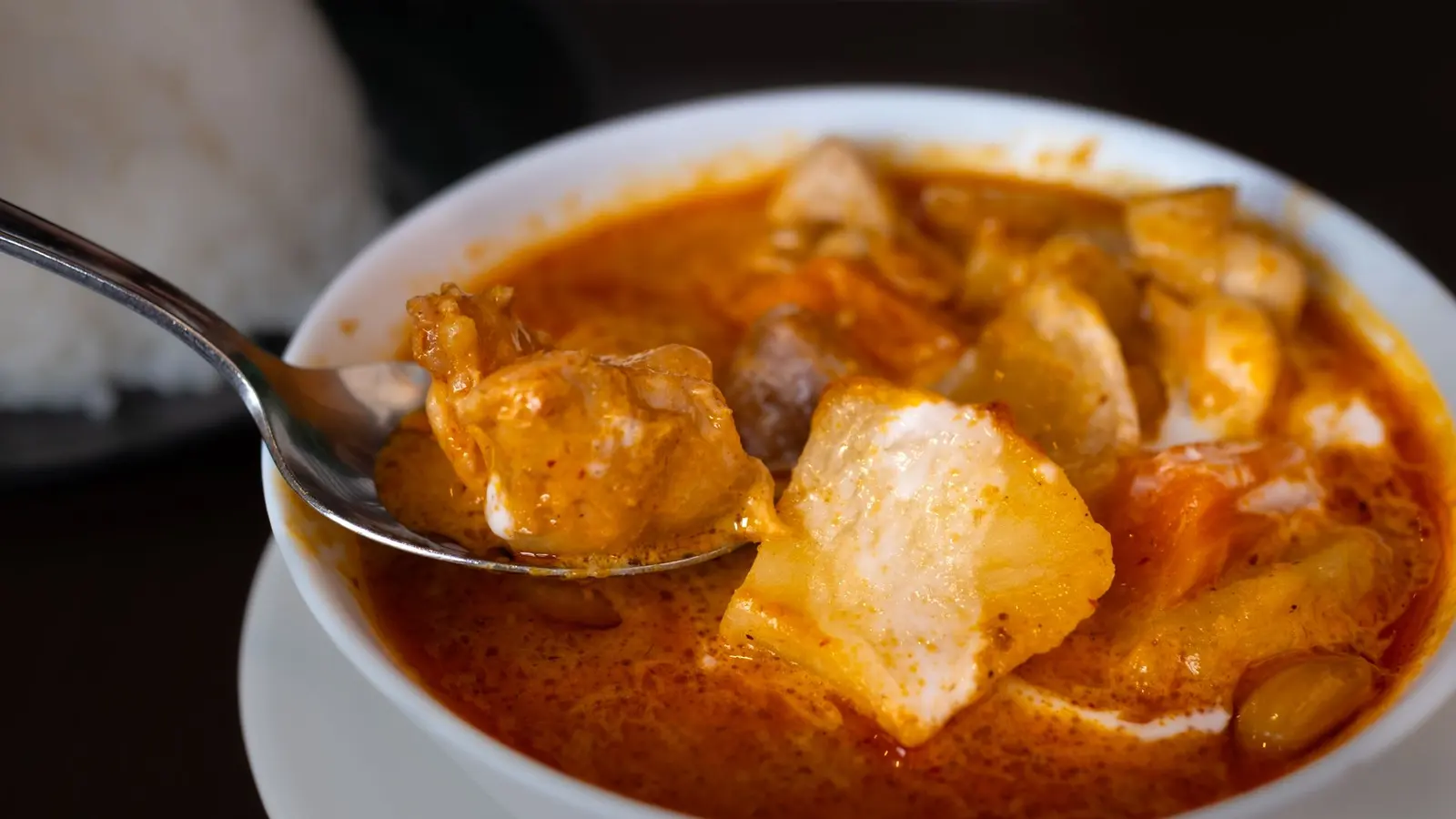
Singapore curry chicken is a mild to medium-hot curry with a thin, coconut-rich gravy. Bone-in chicken and chunks of potato simmer in it until soft. Families cook it for weekend lunches and gatherings. People eat it with white rice, mop it up with a crusty baguette, or ladle it over bee hoon at hawker stalls.
It is Singaporean because it borrows from several food traditions at once. The spice paste and coconut milk come from the Malay and Peranakan kitchen, the curry powder blend from Indian cooking, and the bread on the side from colonial-era kopitiam habits. The result is a curry you will find in Chinese, Peranakan and mixed homes across the island.
Ingredients
For the spice paste (rempah)
- 150 g shallots (about 10), peeled
- 5 cloves garlic, peeled
- 3 cm piece ginger, peeled and sliced
- 2 stalks lemongrass, bottom white part only, sliced
- 6 dried chillies, soaked in hot water for 15 minutes and drained (use 2 or 3 for a milder curry)
- 1 tsp belacan (shrimp paste), optional
For the curry
- 1 kg bone-in chicken thighs and drumsticks, cut into large pieces (ask the butcher at the wet market to chop them, or buy pre-cut curry chicken packs)
- 500 g potatoes (3 medium), peeled and cut into large chunks
- 4 tbsp (about 30 g) meat curry powder
- 4 tbsp cooking oil
- 1 cinnamon stick, about 5 cm
- 2 star anise
- 1 sprig curry leaves (about 15 leaves)
- 500 ml water
- 400 ml coconut milk (santan)
- 1 tsp salt, plus more to taste
- 1 tsp sugar
- 8 tau pok (fried tofu puffs), halved, optional
To serve
- Cooked white rice, or a crusty baguette or French loaf
Substitutes
- Curry leaves: leave them out if you cannot find them. Wet markets and Indian grocers sell them cheaply.
- Fresh santan: wet market coconut stalls sell freshly pressed santan. Use the boxed or canned kind if you cannot get it.
- Dried chillies: swap in 1 tbsp chilli paste from a jar.
- Belacan: skip it if you dislike the smell. The curry will taste a little less deep.
- Shallots: you can use 1 large red onion, but the paste will be sweeter and less fragrant.
Method
- Rub the chicken with 1 tbsp of the curry powder and ½ tsp salt. Set it aside while you make the paste.
- Blend the shallots, garlic, ginger, lemongrass, drained chillies and belacan with 2 to 3 tbsp water until you have a fairly smooth paste. This takes about 1 minute.
- Mix the remaining 3 tbsp curry powder with 3 tbsp water to make a thick slurry.
- Heat the oil in a large heavy pot over medium heat. Add the cinnamon, star anise and curry leaves and fry for 30 seconds, until fragrant.
- Add the spice paste. Fry it on medium-low heat for 8 to 10 minutes, stirring often, until it darkens, smells sweet and the oil starts to separate from it.
- Stir in the curry powder slurry and fry for another 2 minutes so the powder loses its raw taste.
- Add the chicken and turn the pieces in the paste over medium heat for 3 to 4 minutes, until they are coated and lightly sealed.
- Pour in the water and bring the pot to a boil over high heat.
- Turn the heat down to low, cover and simmer for 15 minutes.
- Add the potatoes, cover again and simmer for 15 minutes more.
- Stir in the coconut milk, salt, sugar and tau pok. Keep the heat low so the curry only bubbles gently. Cook uncovered for 10 to 15 minutes, until the potatoes are soft and the chicken pulls easily from the bone.
- Taste and add more salt if needed. Turn off the heat and let the curry rest for 10 minutes before serving with rice or bread.
Tips
- Fry the paste properly. Raw-tasting, harsh curry nearly always comes from paste that was not cooked long enough. Wait until the oil separates.
- Do not boil the coconut milk hard. It can split and turn grainy. Keep it at a gentle simmer.
- Make it a day ahead. The flavour gets better overnight. Cool the curry, cover it and keep it in the fridge for up to 3 days. Reheat it gently on the stove.
- Freezing: the gravy and chicken freeze well for up to 1 month, but the potatoes turn mealy. Freeze the curry without them and add freshly cooked potatoes when you reheat.
- Thinner or thicker: add a splash of water for a soupier curry to pour over noodles. Simmer uncovered a little longer if you want a thicker gravy for bread.
Where to eat it in Singapore
- Na Na Curry, Bukit Merah View Market & Hawker Centre, #01-47, Blk 115 Bukit Merah View. A couple runs this stall and makes the curry paste from scratch. It is best known for fish head curry, but chicken curry is also on the menu, with rice or bread to soak up the gravy. It is listed in the MICHELIN Guide Singapore.
- Hock Hai (Hong Lim) Curry Chicken Noodle, Bedok Interchange Hawker Centre, #01-58, 208 New Upper Changi Road. Curry chicken served over bee hoon, yellow noodles or kway teow, in a gravy that leans spicier than most. Expect queues at lunch and dinner. It is listed in the MICHELIN Guide Singapore.
Hawker hours change often, so check before you make a special trip.
The story
In Singapore, curry chicken is widely seen as a Peranakan Chinese dish. The National Library Board's BiblioAsia magazine places it alongside babi pongteh and chap chye as well-known Peranakan dishes. It also became a staple of Hainanese curry rice, where a plate of rice comes with pork chop, curry chicken and braised vegetables under a pour of curry gravy. BiblioAsia links this mix to Hainanese cooks who worked in Peranakan and British households in colonial times. After the Japanese Occupation (1942 to 1945), some of them opened kopitiams and brought those home-kitchen dishes to the public.