
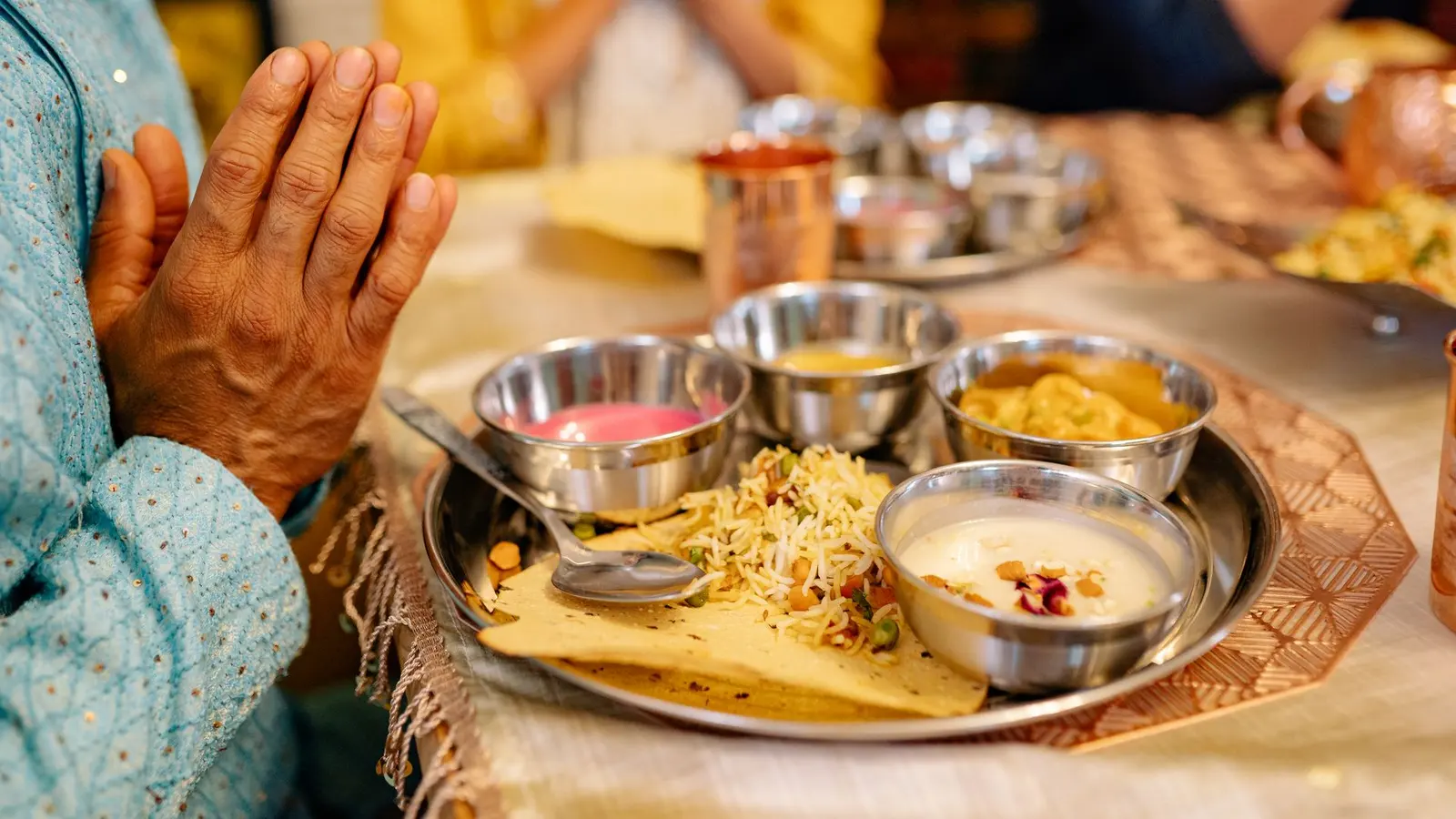
Payasam is a sweet South Indian pudding. This version, often called semiya payasam, is made with thin wheat vermicelli. You toast the vermicelli in ghee and simmer it in milk until it turns soft and creamy. Cardamom, fried cashews and raisins go in at the end. It is served warm or chilled, usually in small cups or bowls. In Indian banana leaf meals in Singapore, it is often the sweet at the end of the meal.
In Singapore, payasam is the sweet that comes out at birthdays, weddings and religious festivals in Indian homes. Many Indian vegetarian restaurants also serve a small portion with their set meals. Local cooks have their own takes on it too. Some make a brown version sweetened with gula melaka, the palm sugar that is found in kitchens all over Singapore.
Ingredients
For the payasam
- 1 litre full-cream fresh milk
- 60 g thin wheat vermicelli (sold as semiya or seviyan at Indian grocers). Pre-roasted packs save a step. If you can't find it, break angel hair pasta into 3 cm pieces.
- 90 to 110 g white sugar, to taste
- 3 tbsp sweetened condensed milk (optional, for a richer, thicker pudding)
- 4 green cardamom pods, seeds crushed, or 1/2 tsp ground cardamom
- A pinch of salt
For the garnish
- 2 tbsp ghee. Unsalted butter works but browns faster.
- 20 g cashew nuts, halved
- 20 g raisins
- A few saffron strands soaked in 1 tbsp warm milk (optional)
Method
- Heat 1 tbsp ghee in a heavy-based pot over medium-low heat.
- Break the vermicelli into short pieces. Stir it in the ghee for 3 to 4 minutes until golden brown, then tip it onto a plate. If your vermicelli is pre-roasted, toast it for just 1 minute.
- Pour the milk into the same pot and bring it to a gentle boil over medium heat, stirring now and then so it does not catch on the bottom. This takes about 8 minutes.
- Add the toasted vermicelli and turn the heat down to low. Simmer for 8 to 10 minutes, stirring every minute or two, until the strands are soft.
- Stir in the sugar, the salt and the condensed milk if you are using it. Simmer for another 5 minutes until the milk has thickened a little.
- Add the cardamom, and the saffron with its soaking milk if using. Turn off the heat.
- In a small pan, heat the remaining 1 tbsp ghee over medium-low heat. Fry the cashews for about 1 minute until light golden. Add the raisins and fry for 20 to 30 seconds until they puff up.
- Pour the nuts, raisins and ghee into the payasam and stir.
- Rest it for 5 minutes, then serve warm. You can also cool it and chill it for at least 2 hours.
Tips
- Payasam thickens a lot as it cools. If you plan to chill it, take it off the heat while it still looks a little thin. To loosen a thick batch, stir in a splash of warm milk.
- If you don't toast the vermicelli first, it clumps and goes soggy.
- Keep the heat low once the vermicelli goes in. Milk scorches easily, and a burnt taste runs through the whole pot.
- For a brown version, swap the white sugar for grated gula melaka. Melt it in a few spoons of water, strain it, and stir it in at the end with the heat off so the milk does not split.
- Payasam keeps for up to 2 days in a covered container in the fridge. Add the cashews just before serving if you want them to stay crisp.
Where to eat it in Singapore
- Ananda Bhavan, 58 Serangoon Road. This vegetarian chain lists a "Payasam of the Day" on its menu. Its South Indian and biryani set meals come with payasam. The outlet opens 7.30am to 10pm daily.
- Ananda Bhavan, 95 Syed Alwi Road. This is another branch at the edge of Little India and has the same menu. It opens 7.30am to 11pm.
- Komala Vilas, 76 to 78 Serangoon Road. This Little India vegetarian restaurant dates from 1947 and opens 7am to 10.30pm daily, including public holidays. Its menu is posted as images, so we could not confirm that payasam is on it. Ask the staff whether it is on that day's set meals.
The story
Payasam came to Singapore with migrants from South India, and Malayalee families from Kerala are especially known for it. The National Heritage Board's Roots site lists payasam among the most popular Indian sweets in Singapore. It notes that Indian desserts here are usually made without eggs, using milk, ghee and sugar, and that payasam is central to birthdays, weddings and religious festivals. In a 2026 National Library Board BiblioAsia podcast, cookbook author Dhershini Winodan explained that payasam comes in white versions made with milk and brown versions made with jaggery or gula melaka. She also described a Singapore-style jackfruit payasam made with gula melaka, sago and evaporated milk.
Last updated 25 Nov 2026 · Checked against official sources on 25 Nov 2026