
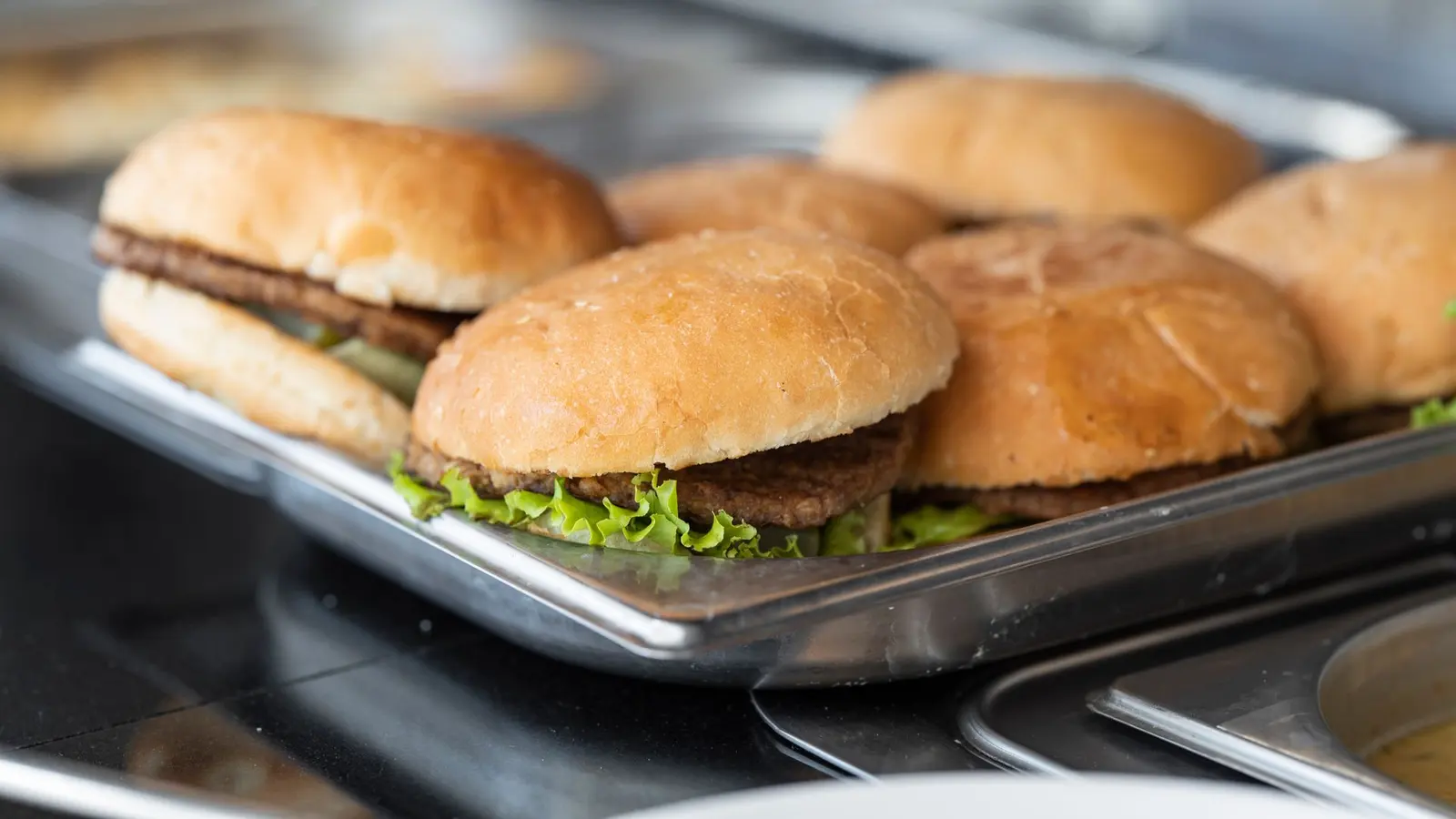
Nasi lemak is coconut rice cooked with pandan and served with sambal, fried anchovies, peanuts, cucumber and egg. Malay, Chinese and Indian stalls across Singapore all sell it, from breakfast through to supper. This burger keeps all of those parts and changes only the shape. The rice is pressed into rounds and pan-seared until crisp, so it works as the bun.
What makes it Singaporean is the plate it comes from. The sambal is sweet, sour and medium-hot, which is how local stalls usually make it. Fast-food chains and cafes here have turned the dish into a burger for National Day more than once. This version puts the coconut rice back in, because some people complained the first chain version left it out.
Ingredients
For the coconut rice buns
- 300 g Japanese short-grain rice (or 260 g jasmine rice plus 40 g glutinous rice, so the buns hold together)
- 200 ml coconut milk (a carton or can is fine)
- 160 ml water
- 2 pandan leaves, tied in a knot (frozen pandan works too; leave it out if you cannot find any)
- 1 thin slice ginger
- 1 tsp salt
- 2 tbsp cooking oil, for searing
For the sambal
- 20 g dried red chillies (about 20 chillies), seeds shaken out
- 6 shallots, peeled
- 3 cloves garlic, peeled
- 5 g belacan (shrimp paste), or 1 tsp fish sauce
- 1 tbsp tamarind pulp mixed with 80 ml warm water and strained (or 1 tbsp lime juice)
- 2 tbsp sugar (gula melaka gives a deeper flavour)
- 1/2 tsp salt
- 4 tbsp cooking oil
For the chicken
- 4 boneless chicken thighs, skin on (about 600 g)
- 1 tsp ground turmeric
- 1 tsp salt
- 1/2 tsp ground white pepper
- 3 tbsp coconut milk
- 60 g rice flour or cornflour
- Cooking oil, about 1 cm deep in the pan
To assemble
- 4 eggs
- 30 g dried ikan bilis (anchovies), rinsed and patted dry
- 40 g roasted peanuts
- 1 small Japanese cucumber, thinly sliced
Method
- Soak the dried chillies in hot water for 20 minutes, until soft. Drain them.
- Rinse the rice until the water runs nearly clear. Drain well.
- Put the rice, coconut milk, water, pandan, ginger and salt in a rice cooker and start the normal cycle. On the stove, bring to a boil, cover, cook on low heat for 15 minutes, then rest off the heat for 10 minutes.
- While the rice cooks, mix the chicken with the turmeric, salt, pepper and coconut milk. Leave it in the fridge for at least 20 minutes.
- Wrap the belacan in foil and toast it in a dry pan over medium heat for 2 minutes per side.
- Blend the chillies, shallots, garlic and toasted belacan with 2 tbsp water to a smooth paste.
- Heat 4 tbsp oil in a small pot over medium-low heat. Add the paste and stir often for 15 to 20 minutes, until it turns dark red and the oil separates.
- Add the tamarind water, sugar and salt to the sambal. Simmer on low heat for 5 minutes, until thick. Taste, adjust the sugar and salt, and set aside.
- Take out the pandan and ginger and fluff the rice. Let it cool for 10 minutes, just until you can handle it.
- Line a 9 to 10 cm ring mould (or a clean tuna can with both ends removed) with cling film. Press in about 90 g rice firmly to make a round 1.5 cm thick. Repeat until you have 8 buns.
- Chill the rice buns on a tray, uncovered, for 30 minutes so they firm up.
- Heat the frying oil in a wide pan over medium heat to about 170°C. Coat each thigh in the flour and shake off the excess.
- Fry the chicken skin side down for 5 to 6 minutes, turn it, and fry 4 to 5 minutes more, until golden and cooked through (75°C in the thickest part). Drain on paper towel.
- Fry the ikan bilis in the same oil on medium-low heat for 2 to 3 minutes, until crisp but not dark. Drain them.
- Heat 1 tbsp oil in a non-stick pan over medium-high heat. Sear the rice buns for 3 to 4 minutes per side, until crisp and golden. Turn them gently with a wide spatula. Do it in batches and add more oil as needed.
- Fry the eggs sunny side up in the same pan for 2 to 3 minutes.
- To build each burger: one rice bun, cucumber slices, a thigh, a spoonful of sambal, the egg, a few ikan bilis and peanuts, then a second bun on top. Serve straight away with extra sambal on the side.
Tips
- Make the sambal ahead. It keeps for up to a week in a clean jar in the fridge, or a month in the freezer.
- You can shape the rice buns the night before. Keep them covered in the fridge and sear them just before eating.
- Wet your hands or the back of a spoon when pressing the rice, so it does not stick.
- Most broken buns come from loose packing or flipping too early. Press hard, and wait until a crust forms before you turn them.
- Cook the sambal until the oil separates. If you stop early, it tastes raw and harsh.
- Store leftover chicken and rice separately in the fridge for up to 2 days. Reheat the chicken in an oven or air fryer so it stays crisp.
Where to eat it in Singapore
- Rawr Cafe by Wunderfolks, 134 Jalan Besar, inside Wink Hostel. This tiger-themed cafe opens 9.30am to 9pm daily. It sells a nasi lemak burger with fried chicken, egg, ikan bilis and lettuce for SGD 18, with fries. It uses brioche buns, not rice.
- The Coconut Club, with outlets at Beach Road, Siglap and New Bahru. This is a sit-down restaurant known for nasi lemak made with coconut rice and fried chicken. It is the plate this burger is based on, not a burger. Check its website for hours and reservations.
- Selera Rasa Nasi Lemak, Adam Road Food Centre, 2 Adam Road, #01-02. A well-known hawker stall serving classic nasi lemak, with a second outlet at 603 Ang Mo Kio Avenue 5.
Chains such as McDonald's Singapore have sold nasi lemak burgers as limited-time specials, usually around National Day. Check their apps or websites before you go.
The story
Nasi lemak means "fatty rice" in Malay. The name comes from the rich coconut milk the rice is cooked in. The National Heritage Board's Roots site says the dish is thought to come from 19th-century coastal Malay communities on the west coast of the Malay Peninsula, where coconuts and anchovies were plentiful. In Singapore in the 1970s, hawkers carried it house to house in small packets. McDonald's Singapore launched its Nasi Lemak Burger on 2017-07-13, ahead of National Day, and Roots says it sold out within two weeks. That burger used regular buns and a coconut-flavoured chicken thigh but no rice, and CNBC reported that some locals said it should not be called nasi lemak because the rice was missing. Home cooks and cafes have since made rice-bun versions like this one.
Last updated 25 Nov 2026 · Checked against official sources on 25 Nov 2026