
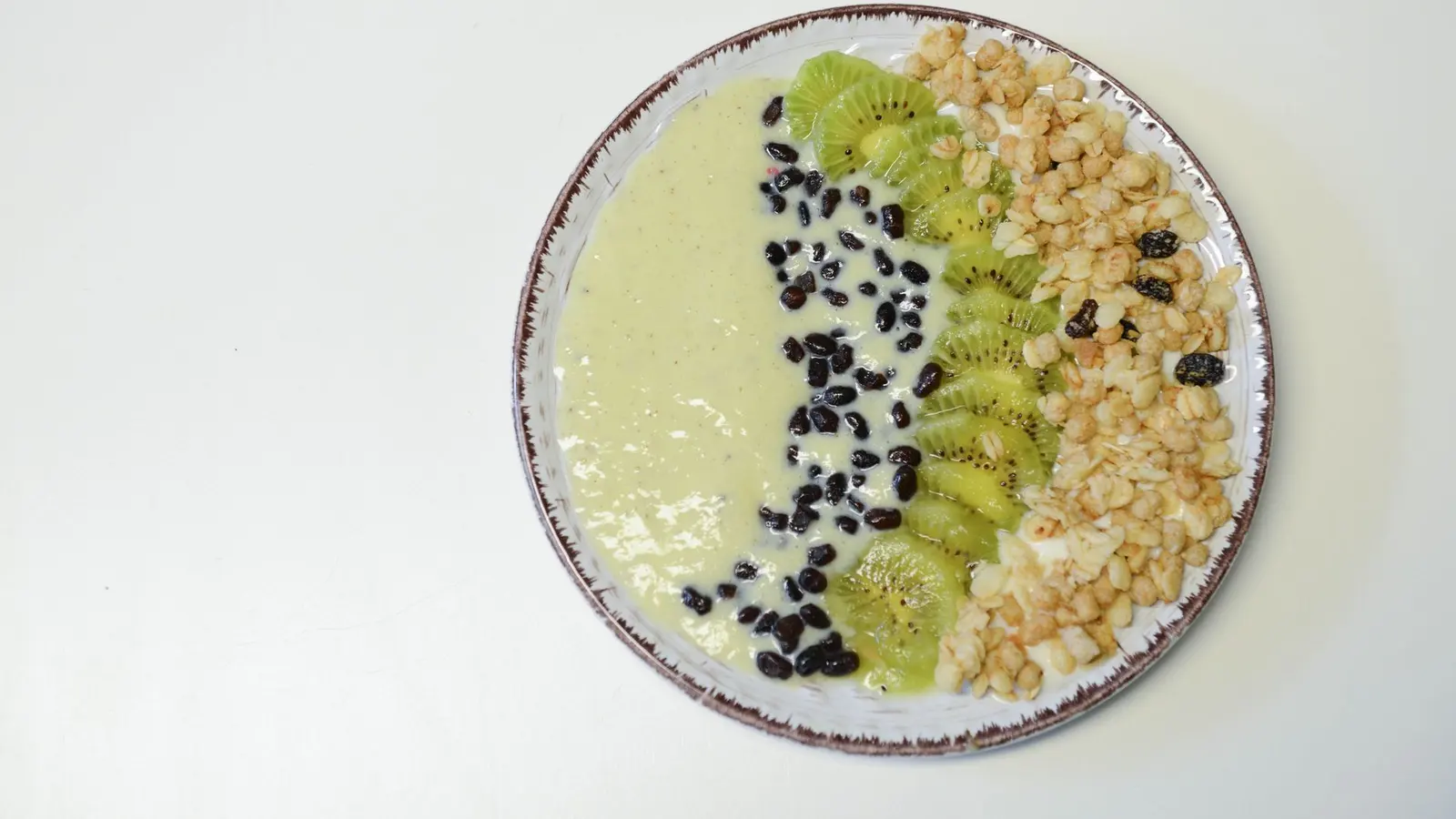
Kaya toast with soft-boiled eggs and kopi is the classic Singapore breakfast. This recipe keeps the flavours of that breakfast in a lighter form. Rolled oats soak overnight in milk, yoghurt and a little coconut milk sweetened with kaya, the coconut and egg jam sold in jars across the island. In the morning you get a cold, creamy pot that tastes of coconut and pandan, with no toaster or stove needed.
This is not a traditional dish. It is an insingapore kitchen recipe. It uses oats and yoghurt in place of white bread and butter, and a small amount of kaya for sweetness. You can find everything at a neighbourhood supermarket, and it is easy to make in a hotel room with a mini fridge or in an HDB kitchen.
Ingredients
For the oats (2 jars)
- 100 g rolled oats (not instant oats)
- 200 ml low-fat fresh milk, or unsweetened soy or oat milk
- 60 ml light coconut milk (from a carton or tin)
- 100 g plain Greek-style yoghurt
- 40 g kaya (about 2 heaped tablespoons), plus 2 tsp for topping
- 1 tbsp chia seeds (optional, for a thicker set)
- 1 small pinch of salt
- 1 pandan leaf, washed (optional)
For the topping
- 2 tbsp unsweetened desiccated coconut
- 1 small banana, sliced
Substitutes
- Pandan leaf: wet markets often sell it in bundles. If you cannot find it, use 2 or 3 drops of pandan essence, or leave it out if your kaya is the green pandan kind.
- Kaya: if you cannot find a jar, use 1 tbsp gula melaka syrup or brown sugar with 2 extra tbsp coconut milk. The result will taste less custardy.
- Greek yoghurt: any plain yoghurt works. Use a little less milk if your yoghurt is runny.
Method
- Put the desiccated coconut in a dry frying pan over medium-low heat. Stir it for 3 to 4 minutes, until it turns light golden. Tip it onto a plate to cool.
- Put the 40 g of kaya and the coconut milk in a mixing bowl. Whisk for about 30 seconds, until the kaya has dissolved and no lumps are left.
- Add the milk, yoghurt and salt. Whisk until smooth.
- Stir in the oats and chia seeds until all the oats are wet.
- Cut the pandan leaf in half and tie each half in a loose knot. Put one knot in each of two jars or lidded containers.
- Divide the oat mixture between the jars, pushing the pandan under the surface.
- Close the lids and refrigerate for at least 6 hours, or overnight.
- In the morning, remove the pandan and stir. If the oats are too thick, stir in a splash of milk.
- Top each jar with banana slices, 1 tsp kaya and half the toasted coconut. Eat cold.
Tips
- Make ahead: the soaked oats keep for up to 2 days in a covered jar in the fridge. Add the banana and coconut only when you eat them, so they stay fresh and crunchy.
- Choose the right oats: rolled oats soften well overnight. Instant oats turn mushy, and steel-cut oats stay too hard without cooking.
- Loosen the kaya first: kaya is thick. If you add it straight to the oats, you get sweet lumps. Whisk it into the coconut milk first.
- Taste before you add more: kaya brands vary in sweetness. Start with the amount here and add more kaya on top if you want it sweeter.
- Allergens: kaya contains egg and coconut. Keep the opened jar in the fridge.
Where to eat it in Singapore
These oats are a home recipe, so you will not find them on a kopitiam menu. To taste the kaya toast breakfast that inspired them, try:
- Ya Kun Kaya Toast, Far East Square: 18 China Street, #01-01, Singapore 049560. Ya Kun lists this outlet as reopened. Its hours are 7.30am to 7pm Monday to Friday, and 7.30am to 5pm on weekends and public holidays. Last orders are half an hour before closing. The company says its coffee stall has been at this site since 1998.
- Killiney Kopitiam, 67 Killiney Road: the chain's original shop, which it calls the place "where it all began". The company says the shop front dates from 1919. It describes the shop as Singapore's oldest coffeeshop, a title it says was recognised by the Singapore Book of Records. Check the Killiney Kopitiam website for current hours before you go.
The story
The National Heritage Board's Roots website lists the kaya and kopi breakfast as part of Singapore's intangible cultural heritage. It describes kaya as an egg jam made with coconut milk and sugar. Peranakan-style kaya gets its green colour from pandan. Hainanese-style kaya gets its brown colour from caramelised sugar. According to Roots, this way of eating breakfast arrived with Hainanese immigrants in the 19th century. Many of them worked as cooks on European ships, or in European homes and hotels. After the British left during the Japanese Occupation, Hainanese families opened eateries, bakeries and coffee-roasting businesses in the shops left behind. The government site SG101 adds that these cooks served local versions of Western food, with coconut kaya in place of fruit jam. Roots notes that many coffeeshops are still run by people of Hainanese descent.
Last updated 25 Nov 2026 · Checked against official sources on 25 Nov 2026