
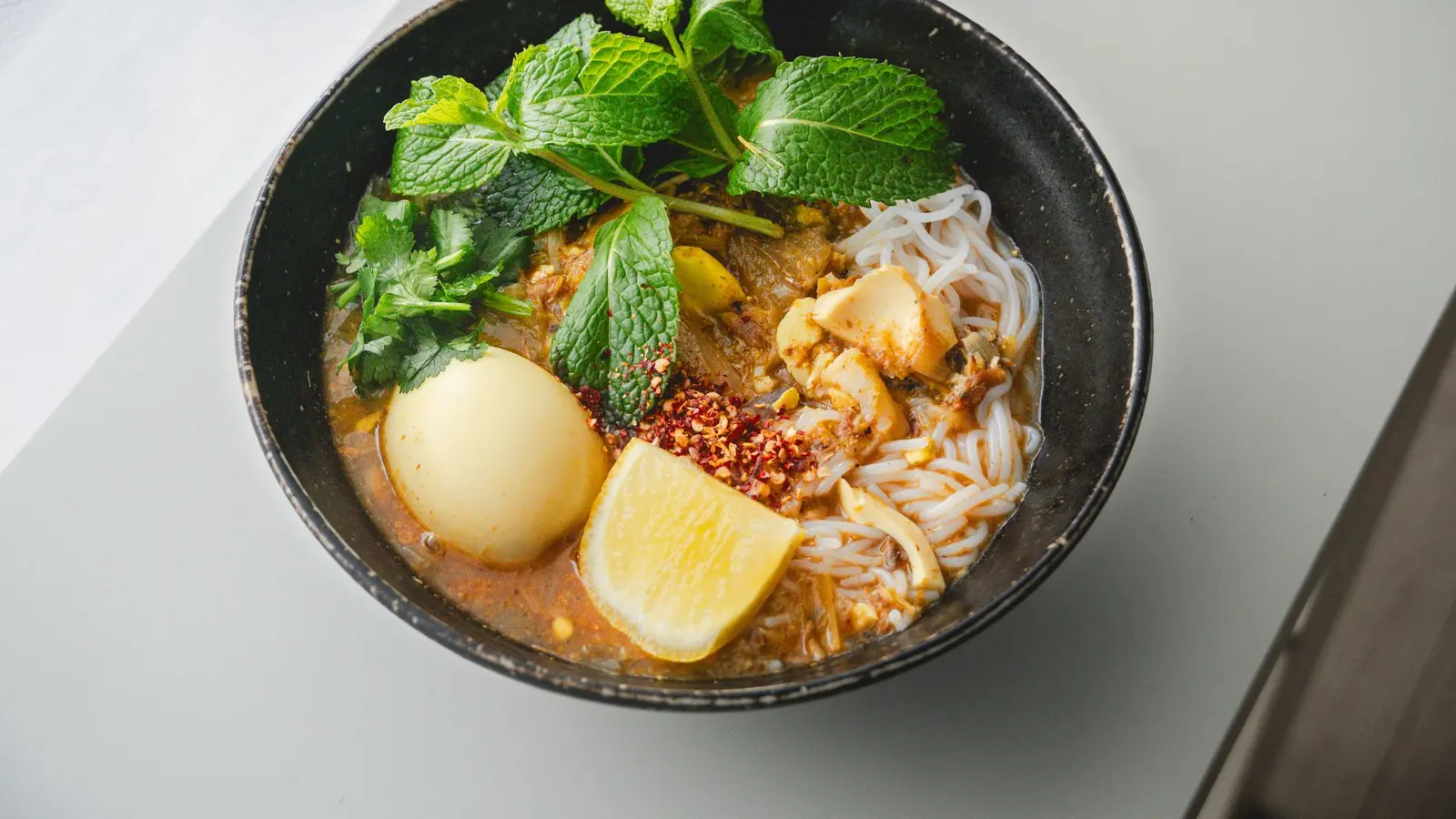
Nyonya laksa lemak is a bowl of thick rice noodles in a spicy, orange-red soup made from coconut milk, dried shrimp and a pounded spice paste. It is topped with prawns, fishcake, egg, bean sprouts and shredded laksa leaves. "Lemak" means rich with coconut milk.
This is a Peranakan dish, and the Peranakan community helped shape Singapore's food. Laksa is now sold at coffee shops and food courts across the island and is cooked at home for family meals. The prawn-shell stock in this recipe gives the soup a deep shellfish flavour. You can buy everything you need at a Singapore supermarket or wet market.
Ingredients
For the spice paste (rempah)
- 20 g dried red chillies, soaked in hot water for 20 minutes, then drained
- 3 fresh red chillies
- 150 g shallots, peeled
- 4 cloves garlic
- 3 stalks lemongrass, bottom 10 cm only, sliced
- 30 g galangal, peeled and sliced
- 20 g fresh turmeric, peeled (or 1 tsp ground turmeric)
- 6 candlenuts (buah keras), or 8 macadamia nuts
- 40 g dried shrimp, soaked for 15 minutes, then drained
- 15 g belacan (shrimp paste), toasted in a dry pan until fragrant
- 1 tbsp ground coriander
- 100 ml cooking oil
For the soup
- 500 g medium prawns, shell on
- 1.5 litres water
- 600 ml coconut milk (fresh santan, or 2 cartons of 200 ml plus 200 ml water)
- 1 tsp salt, plus more to taste
- 1 to 2 tbsp sugar
- 4 tau pok (fried tofu puffs), halved
For the bowls
- 600 g fresh thick rice noodles (laksa noodles), or 250 g dried thick rice vermicelli
- 4 eggs
- 150 g fishcake, sliced
- 200 g bean sprouts, tails picked
- 1 handful laksa leaves (daun kesom), finely shredded
- Sambal chilli, to serve
- Optional: 200 g cockles, blanched for 30 seconds
Method
- Peel the prawns, keeping the heads and shells. Devein the prawns and chill them until needed.
- Heat 1 tbsp oil in a large pot over medium-high heat. Fry the heads and shells for 3 minutes, pressing the heads down, until they turn orange.
- Add the 1.5 litres of water. Bring to a boil, then lower the heat and simmer for 20 minutes. Strain the stock and throw away the shells.
- While the stock simmers, blend all the spice paste ingredients except the oil until smooth. Add a few spoonfuls of water if the blender gets stuck.
- Heat the 100 ml oil in a clean pot over medium heat. Add the paste and stir often for 15 to 20 minutes, until it darkens, smells sweet and the oil separates out at the edges.
- Pour the prawn stock into the paste and bring it to a boil. Simmer over low heat for 10 minutes.
- Stir in the coconut milk and tau pok. Heat gently for 5 minutes and do not let the soup boil hard, or the coconut milk may split.
- Season with the salt and sugar. Taste and adjust. The soup should be spicy, savoury and slightly sweet.
- Boil the eggs for 9 minutes, cool them in cold water, peel and halve them.
- Bring a separate pot of water to a boil. Poach the prawns for 2 minutes until just pink, then lift them out. Blanch the bean sprouts in the same water for 20 seconds and lift them out.
- Dip the fresh noodles into the boiling water for 30 seconds to warm them. If you use dried noodles, cook them following the packet instructions.
- Divide the noodles between 4 deep bowls. Top with prawns, fishcake, bean sprouts, egg halves and cockles if you are using them.
- Ladle the hot soup over each bowl. Finish with shredded laksa leaves and a spoonful of sambal chilli.
Tips
- Make ahead: the cooked spice paste keeps in the fridge for up to 1 week or in the freezer for 3 months. Freeze it in portions.
- Storage: chill leftover soup separately from the noodles and toppings, and eat it within 2 days. Reheat it gently.
- Do not rush step 5. Paste that is not cooked long enough tastes raw and harsh.
- Laksa leaves are sold at wet market vegetable stalls, often with other herbs. If you cannot find them, use a mix of mint and coriander leaves. The taste will be different but still pleasant.
- Short on time? Use a ready-made laksa paste from the supermarket in place of the homemade spice paste, and still make the prawn stock.
- Fresh thick rice noodles are sold in the chilled section of supermarkets and at wet market noodle stalls. Cut them into short lengths if you plan to eat the laksa with a spoon.
Where to eat it in Singapore
- 328 Katong Laksa: a long-running laksa shop in Katong. Its two East Coast Road shops are at No. 51 (daily 9.30am to 9.30pm) and No. 216 (daily 9.15am to 9pm). It also has outlets at Queensway Shopping Centre, United Square and Westgate. Hours are as listed on its own website.
- King of Laksa: a hawker stall at Stall S3, #02-100, 118 Aljunied Avenue 2. It is listed in the MICHELIN Guide Singapore, which praises its creamy coconut broth and shrimp paste chilli. It serves laksa with prawns or cockles and offers low-carb noodles. Check the stall's opening hours before you go.
The story
The National Heritage Board lists laksa in Singapore's Intangible Cultural Heritage inventory. According to the board, Chinese immigrants who settled in Malacca from the 15th century, and later in the Straits Settlements, mixed local spices with Chinese cooking methods and ingredients. Many Nyonya dishes came from this, including laksa. The name is thought to come from "lakshah", a Hindi word for a kind of noodle, or from Sanskrit. In Singapore, the East Coast has many laksa stalls, especially in Katong, which used to be the centre of the local Peranakan community.
Last updated 25 Nov 2026 · Checked against official sources on 25 Nov 2026