
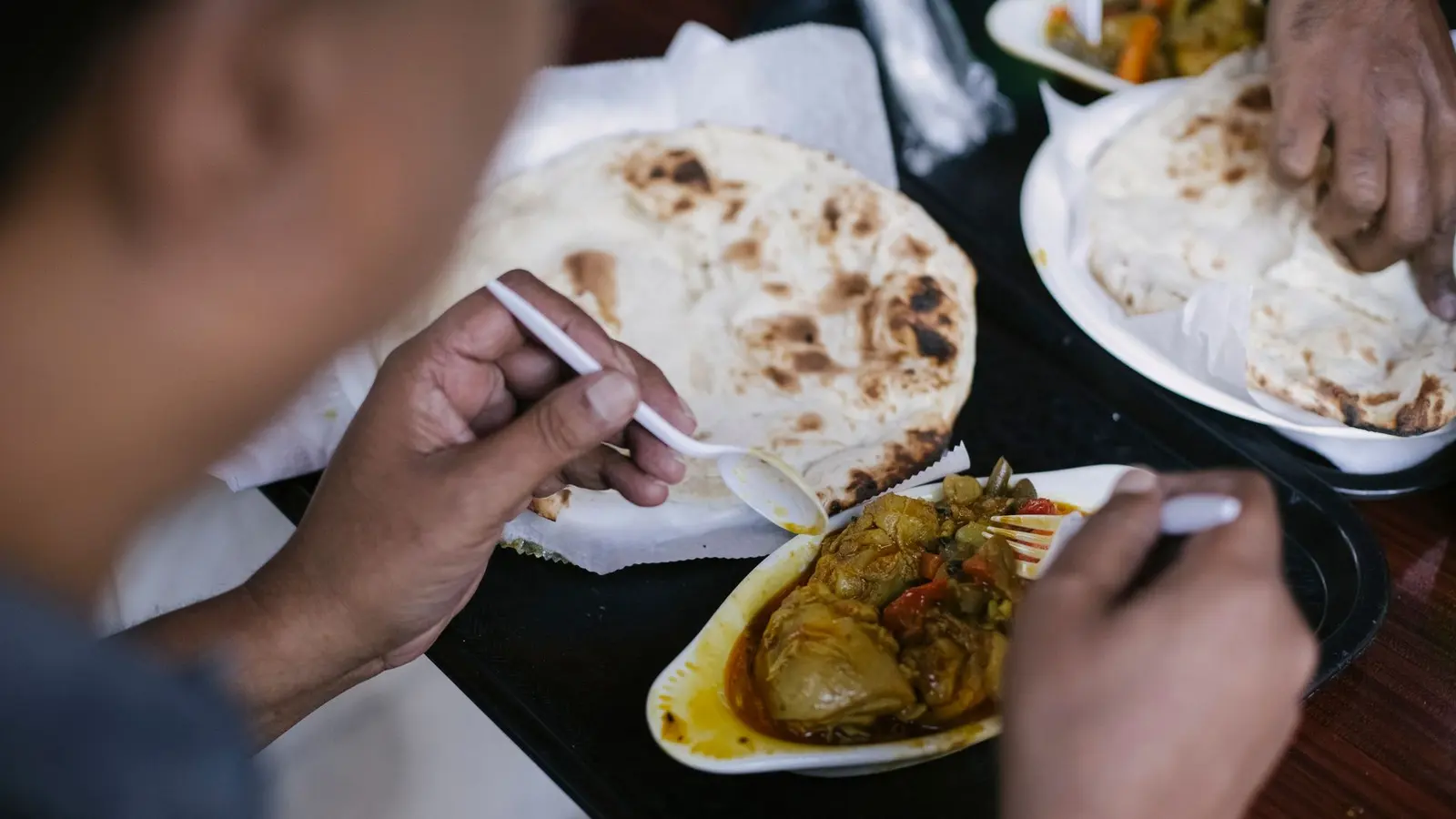
Nyonya curry chicken is a home-style Peranakan curry. Bone-in chicken and potatoes simmer slowly in coconut milk with a spice paste. Compared with many Indian curries, it is milder and more fragrant, and slightly sweet. The flavour comes from lemongrass, galangal, fresh turmeric, candlenuts and a little belacan (fermented shrimp paste).
The dish draws on the mix of cultures behind Peranakan cooking in Singapore. The braising is Chinese in style, while the spices, coconut and belacan come from the Malay world. You can buy everything here at a wet market or a large supermarket. Many families cook a big pot for festive meals and gatherings, and it tastes even better the next day.
Ingredients
For the rempah (spice paste)
- 12 shallots (about 150 g), peeled
- 5 cloves garlic, peeled
- 3 stalks lemongrass, white part only, sliced
- 30 g galangal (lengkuas), peeled and sliced
- 20 g fresh turmeric, peeled and sliced (or 1 tsp ground turmeric)
- 5 candlenuts (buah keras) (or 5 macadamia nuts)
- 15 dried chillies, soaked in hot water for 15 min, deseeded
- 2 fresh red chillies, sliced
- 10 g belacan (shrimp paste), toasted in a dry pan until fragrant
- 3 tbsp water
For the curry
- 1 kg bone-in chicken pieces (thighs and drumsticks), skin on or off
- 500 g potatoes (about 3 medium), peeled and cut in half
- 4 tbsp meat curry powder, mixed with 4 tbsp water into a paste
- 5 tbsp cooking oil
- 2 stalks lemongrass, bruised with the back of a knife
- 4 kaffir lime leaves (daun limau purut), torn
- 400 ml coconut milk (one carton or can)
- 400 ml water
- 1.5 tsp salt, or to taste
- 2 tsp sugar
Substitutes
- Candlenuts: macadamia nuts work the same way and thicken the paste.
- Fresh turmeric: use 1 tsp ground turmeric and add it with the curry powder.
- Galangal: ginger is the closest option, but use only half the amount because it tastes sharper.
- Belacan: leave it out if you must. The curry will be less deep but still good.
Method
- Rub the chicken with 1 tsp of the salt and 1 tbsp of the curry powder paste. Set aside for 15 min.
- Put all the rempah ingredients in a blender and blitz to a smooth paste. Add more water a spoon at a time only if the blades stick.
- Heat the oil in a heavy pot or wok over medium heat. Fry the potatoes for 5 min until lightly golden on the outside, then lift them out and set aside.
- In the same oil, fry the rempah over medium-low heat for 10 to 15 min, stirring often so it does not catch.
- Add the rest of the curry powder paste, the bruised lemongrass and the lime leaves. Fry for another 3 to 5 min, until the paste darkens and the oil separates and shines on top.
- Turn the heat to medium. Add the chicken and stir for 5 min until every piece is coated and the outside turns opaque.
- Pour in the water and half the coconut milk. Bring to a boil, then lower the heat to a gentle simmer.
- Cover and simmer for 15 min.
- Add the fried potatoes. Simmer uncovered for 20 to 25 min, stirring now and then, until the potatoes are tender and the chicken is cooked through.
- Stir in the remaining coconut milk, the rest of the salt and the sugar. Heat for 3 min on low without letting it boil hard, so the coconut milk does not split.
- Taste and adjust the salt and sugar. Rest the curry off the heat for 10 min before serving.
- Serve with steamed rice, a crusty baguette or roti jala.
Tips
- Most of the flavour comes from frying the rempah slowly. If the paste still smells raw or sharp, keep frying.
- Make it a day ahead. Once it cools, the flavours settle and the curry thickens.
- Keep it in the fridge, covered, for up to 3 days. You can freeze it for up to a month, but the potatoes go grainy, so cook fresh ones when you reheat.
- Reheat gently over low heat. Boiling coconut milk hard can make it split and look oily.
- Do not cut the potatoes too small or they break down. Halves or large chunks hold their shape.
- Wet market stalls often sell freshly ground rempah by weight. It saves time, but taste it first, because it may already contain salt.
Where to eat it in Singapore
- Candlenut, 17A Dempsey Road. A Peranakan restaurant run by the COMO group. Its website features a dish called Chef's Mum's Chicken Curry. It opens daily for lunch and dinner, so check the current menu before you go.
- Chilli Padi Nonya Restaurant, 11 Joo Chiat Place #01-03. A long-running Peranakan restaurant in the Katong and Joo Chiat area, open daily for lunch and dinner.
- True Blue Cuisine, 47/49 Armenian Street. A Peranakan restaurant in the civic district. Call ahead to check opening hours and whether curry chicken is on the menu.
The story
The National Heritage Board's Roots inventory describes Peranakan cuisine as a blend of Chinese cooking methods and ingredients with the spices and local produce of the Malay world. Indian, Thai and European influences were added over time. Belacan and kaffir lime leaves are among its signature flavours. According to the Singapore Chinese Cultural Centre, almost every Peranakan dish starts with a rempah, a spice paste that used to be ground by hand with a stone mortar and pestle. The Roots page notes that many home cooks now use blenders instead. Curry chicken is a regular part of the Peranakan family table, and it relies on the same rempah-first method.
Last updated 25 Nov 2026 · Checked against official sources on 25 Nov 2026