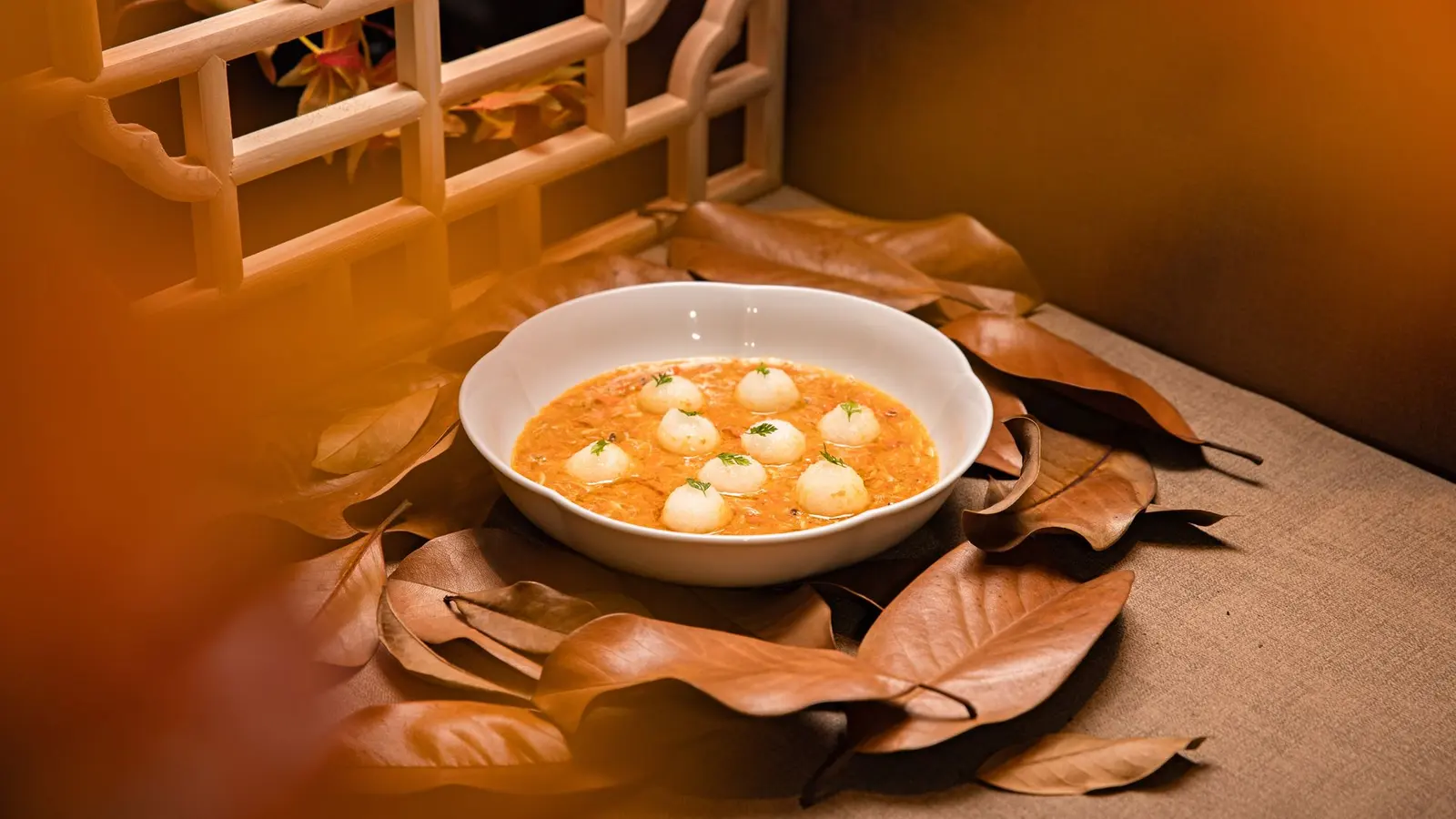
Tang yuan are small, chewy balls made from glutinous rice flour. They are cooked in water and served in a hot, sweet soup. Many Chinese families in Singapore eat them on Dongzhi, the Winter Solstice festival, which falls between 21 and 23 December. The round shape stands for families coming together. You will also find them at dessert shops all year.
The Singapore version is usually filled with black sesame or peanut paste and served in either a ginger or a peanut soup. This recipe uses a sesame filling, some white and some pink balls (the traditional colours here), and a ginger syrup with pandan leaves and brown sugar, a common local way to sweeten the soup. Every ingredient is easy to find in Singapore supermarkets and wet markets.
Ingredients
For the black sesame filling
- 60 g toasted black sesame seeds (or 90 g ready-made black sesame paste from a jar; skip the butter if you use paste)
- 35 g caster sugar
- 30 g unsalted butter, softened (lard or solid coconut oil also work)
For the dough
- 200 g glutinous rice flour (not plain rice flour; the packet should say "glutinous")
- 170 to 180 ml warm water
- 1 to 2 drops red food colouring (optional, for pink balls)
For the ginger syrup
- 1.2 litres water
- 80 g old ginger, peeled and sliced
- 100 g rock sugar (or 90 g white sugar)
- 40 g brown sugar or slab sugar
- 2 pandan leaves, washed and tied in a knot (optional)
Method
- Grind the sesame seeds and sugar in a spice grinder or blender for 20 to 30 seconds, until they form a damp, sandy powder.
- Mix in the softened butter with a spoon until the filling holds together when squeezed.
- Roll the filling into 20 small balls of about 6 g each. Put them on a plate and chill in the fridge for 20 minutes so they firm up.
- Make the syrup while the filling chills. Lightly smash the ginger slices with the flat of a knife.
- Put the water, ginger, rock sugar, brown sugar and pandan in a pot. Bring to a boil over high heat.
- Turn the heat to low and simmer, uncovered, for 20 minutes. Taste and add more sugar if you like it sweeter. Keep it warm on the lowest heat.
- Put the glutinous rice flour in a bowl. Pour in 150 ml of the warm water and stir with chopsticks.
- Add the rest of the water a spoonful at a time, kneading by hand, until the dough is smooth and soft, like play dough. It should not stick to your hands or crack when pressed.
- For pink balls, split off half the dough and knead in the food colouring until even.
- Divide all the dough into 20 pieces of about 18 g each. Cover them with a damp cloth so they do not dry out.
- Flatten one piece into a disc about 5 cm across, with a thinner edge than centre.
- Place a ball of filling in the middle. Gently push the dough up and around it, pinch to seal, then roll between your palms until round and smooth. Repeat with the rest.
- Bring a separate large pot of water to a rolling boil over high heat.
- Lower in the balls, stirring gently once so none stick to the bottom.
- Cook until all the balls float, about 3 to 4 minutes. Lower the heat to medium and cook 2 minutes more.
- Lift the balls out with a slotted spoon and drop them straight into the warm ginger syrup.
- Remove the pandan leaves. Serve 5 balls per bowl with plenty of syrup, while hot.
Tips
- Cook the balls in plain water, not in the syrup. The loose flour on them would make the syrup cloudy and starchy.
- If the dough cracks when you shape it, wet your hands and knead in a few more drops of water. If it is sticky, dust with a little more flour.
- Make ahead: freeze shaped, uncooked balls in one layer on a tray lined with baking paper, then bag them. Cook from frozen and allow 2 to 3 extra minutes.
- The syrup keeps in the fridge for 3 to 4 days. Cooked balls harden in the fridge, so cook only what you will eat.
- Short of time? Supermarket freezers sell packets of ready-made tang yuan. Boil them as above and serve in your homemade ginger syrup.
- Peanut filling: swap the sesame for the same weight of finely crushed roasted peanuts.
Where to eat it in Singapore
- Mei Heong Yuen Dessert, Chinatown. 63-67 Temple Street, Singapore 058611. Its menu lists glutinous rice balls in ginger soup with sesame and peanut fillings. The shop's own site gives hours of 12pm to 9.30pm, Tuesday to Sunday, closed Monday. It also has outlets in several malls, including Chinatown Point, Funan and Suntec City.
- 75 Ah Balling Peanut Soup, Golden Mile Food Centre. 505 Beach Road, #01-75, Singapore 199583. This hawker stall makes tang yuan with fillings such as peanut and black sesame, and lets you pick a ginger, peanut, almond milk or longan red date soup. It was on Eatbook's list of traditional dessert stalls in October 2026, which put four pieces at S$2.80. Check the opening hours before you go.
The story
Dongzhi is the 22nd of the 24 solar terms in the Chinese calendar. Its name means "peak of winter". According to the Singapore Chinese Cultural Centre's Culturepaedia, Singapore has no seasons, so here the festival became mainly a day for family reunion and remembering ancestors. Many of Singapore's early Chinese settlers came from Fujian and Guangdong and brought the habit of eating tang yuan, once known as tuanyuanzi, a name linked to reunion. Families would buy glutinous rice flour in the days before and roll the balls together on the day. Older relatives offered the first bowls to the ancestors. A popular folk tale from Fujian tells of a poor father and daughter who were separated and reunited after the daughter pasted tang yuan on a door, which is why some families once stuck tang yuan on doors and windows. Culturepaedia notes that most households now buy ready-made tang yuan, but many still eat a bowl together on the night.