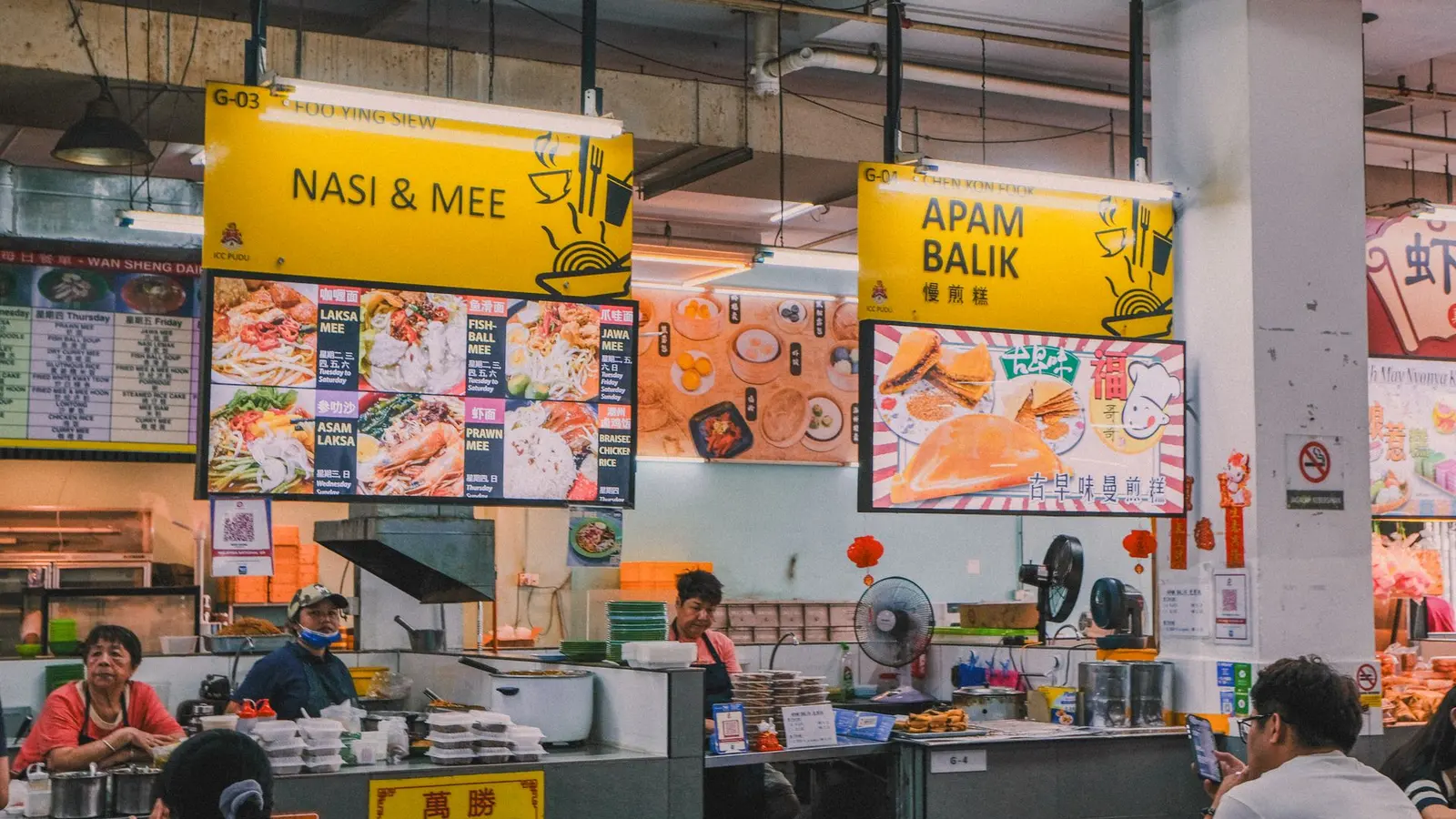
Mee soto is a bowl of thick yellow noodles in soto ayam, a chicken broth coloured gold by turmeric and flavoured with a cooked spice paste called rempah. The chicken that makes the stock is shredded and goes back on top, with bean sprouts, egg, fried shallots and fresh herbs. Most people add a spoonful of chilli at the table.
The broth came from Indonesia. The noodles are the same thick yellow Hokkien noodles used in Chinese hawker dishes. Over the years mee soto became a regular at Malay stalls in hawker centres, and that mix of origins is why it feels so Singaporean. All the ingredients below are easy to find: yellow noodles and kicap manis in supermarket chillers and shelves, and fresh turmeric, galangal and lemongrass at most wet markets.
Ingredients
For the broth
- 1.2 kg whole chicken, or 1 kg bone-in chicken legs
- 3 litres water
- 2 stalks lemongrass, white part only, bruised
- 4 kaffir lime leaves (daun limau purut), torn
- 1 cinnamon stick, about 5 cm
- 3 cloves
- 2 tbsp cooking oil
- 2 tsp salt, plus more to taste
- 1 tsp sugar
For the rempah (spice paste)
- 100 g shallots (about 8), peeled
- 5 cloves garlic
- 30 g ginger, sliced
- 30 g galangal (lengkuas), sliced
- 25 g fresh turmeric, peeled and sliced (or 2 tsp ground turmeric)
- 3 candlenuts (buah keras), optional (or 6 raw cashews)
- 1 tbsp coriander seeds
- 1 tsp cumin seeds
- 1 tsp fennel seeds
- 1/2 tsp white peppercorns
- 1 tsp belacan (shrimp paste), optional
For the sambal kicap
- 6 chilli padi, sliced (use 2 red chillies for less heat)
- 4 tbsp kicap manis (sweet soy sauce)
- 1 tbsp light soy sauce
- 2 calamansi (limau kasturi), juiced, or 1 tbsp lime juice
To serve
- 600 g fresh yellow noodles (Hokkien mee), from the supermarket chiller
- 200 g bean sprouts, tails picked if you have time
- 4 eggs, hard-boiled and halved
- 4 tbsp fried shallots
- 2 stalks spring onion, chopped
- A small handful of Chinese celery (daun sup), chopped (or coriander leaves)
Method
- Put the chicken and 3 litres of water in a large pot. Bring to a boil over high heat, skim off the grey foam, then lower to a gentle simmer.
- Add the lemongrass, lime leaves, cinnamon and cloves. Simmer uncovered on low heat for 35 minutes, until the chicken is cooked through.
- While the chicken cooks, toast the coriander, cumin, fennel and peppercorns in a dry pan over medium heat for 2 minutes, until fragrant. Grind to a powder.
- Blend the shallots, garlic, ginger, galangal, turmeric and candlenuts with 3 tbsp water into a smooth paste. Stir in the ground spices.
- If using belacan, toast it in a dry pan over low heat for 1 minute until it smells strong, then crumble it into the paste.
- Lift the chicken out of the pot onto a plate. Leave the stock on the lowest heat.
- Heat the oil in a frying pan over medium-low heat. Fry the rempah, stirring often, for 10 to 12 minutes, until it darkens and the oil starts to separate from the paste.
- Scrape the fried rempah into the stock. Add the salt and sugar and simmer on low heat for 20 minutes.
- When the chicken is cool enough to handle, pull the meat off the bones and shred it. Return the bones to the pot for the rest of the simmer if you like a richer broth, then strain them out.
- Taste the broth and adjust the salt. It should be well seasoned, because the noodles will absorb some of it.
- Mix the sambal kicap ingredients in a small bowl.
- Bring a separate pot of water to a rolling boil. Blanch the bean sprouts for 20 seconds and drain.
- Blanch one portion of noodles at a time for 30 seconds in the same water, shake dry and place in a bowl.
- Top each bowl with bean sprouts, shredded chicken and half an egg. Ladle over plenty of very hot broth.
- Finish with fried shallots, spring onion and Chinese celery. Serve the sambal kicap on the side.
Tips
- Make ahead: the broth and shredded chicken keep for 3 days in the fridge in separate containers. The broth also freezes well for up to 2 months.
- Do not rush the rempah. Undercooked paste tastes raw and harsh. Keep the heat moderate and stir until the oil separates.
- Fresh turmeric stains hands, boards and plastic. Wear gloves or use a glass or steel board.
- Store-bought yellow noodles are already cooked and coated in oil. A short blanch warms them and removes some of the oily, alkaline taste. Do not boil them for long or they go soft.
- Keep noodles and broth apart until serving. Leftover noodles sitting in broth turn mushy.
- For a fuller bowl, add bergedil (fried potato patties) or serve the same broth with compressed rice cakes instead of noodles for soto ayam.
Where to eat it in Singapore
- Selamat Datang Warong Pak Sapari, #01-09 Adam Road Food Centre, 2 Adam Road. Listed in the MICHELIN Guide, which highlights its mee soto. A Seth Lui review updated on 2026-11-19 gives hours of 8am to 3pm, Saturday to Thursday, closed on Friday. Go early, as hawker stalls can sell out.
- Inspirasi, #01-11 Bedok Interchange Hawker Centre, 208B New Upper Changi Road. A family stall running since 1970, best known for soto ayam in a turmeric broth and mee rebus, at about SGD 3 to SGD 3.50 per person. A Seth Lui review updated on 2026-02-11 gives hours of 11.30am to 9.30pm, Monday to Saturday, closed on Sunday, and notes that hours can vary and queues are common.
The story
According to the National Library Board's Infopedia, the soto ayam broth behind mee soto traces back to Madurese migrants living in Surabaya, East Java. Their first version was made with spices alone, and chicken and other meats were added later as the soup won over local eaters. Infopedia notes that soto ayam was once kept for traditional parties and went back to being street food after Indonesia's independence in 1945. It has more than 30 regional variants in Indonesia. Pairing the broth with thick yellow Hokkien noodles gave Singapore the mee soto sold at its hawker stalls today.