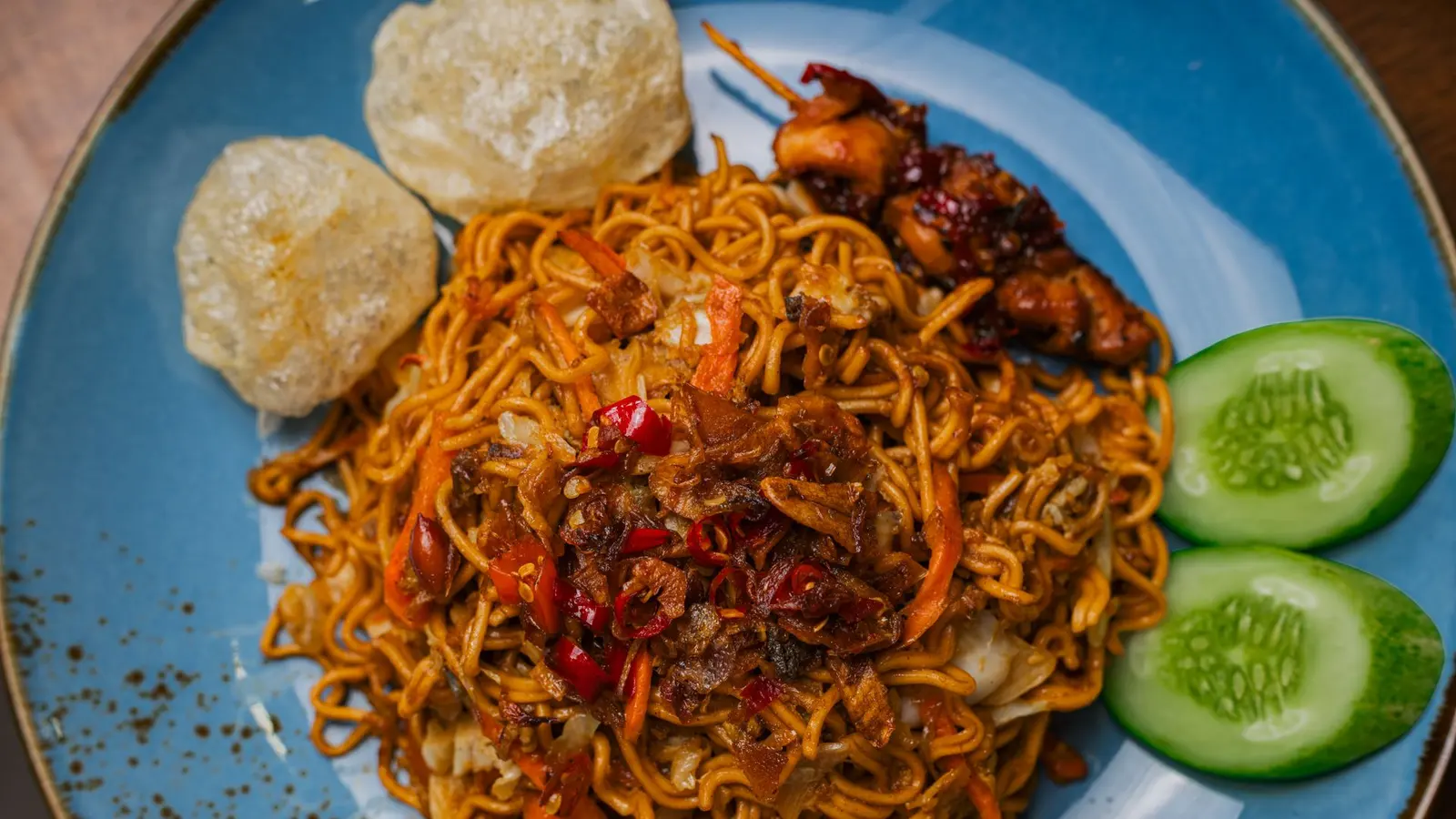
Mee goreng means "fried noodles" in Malay. In Singapore the best-known version comes from Indian Muslim stalls. Thick yellow egg noodles are fried hard in a hot wok with chilli paste, tomato ketchup and a little sweet soy sauce, then tossed with potato, tofu, bean sprouts, greens and egg. The noodles come out red, sticky and a bit smoky, and you squeeze lime over them at the table.
The dish is Singaporean because of how it mixes things. The yellow noodles and tofu come from Chinese cooking, the spice comes from the Indian Muslim kitchen, and the sweet soy and lime are local habits. People eat it for lunch, dinner or supper at hawker centres and 24-hour eateries across the island.
Ingredients
Serves 2. A home wok holds two portions at a time. To feed four, cook two batches.
For the chilli paste
- 10 dried red chillies, snipped into pieces and seeded for less heat
- 4 shallots (about 60 g), peeled
- 3 cloves garlic, peeled
- 3 tbsp cooking oil
- 1/2 tsp salt
For the sauce
- 3 tbsp tomato ketchup
- 1 tbsp bottled chilli sauce
- 1 tbsp kecap manis (sweet soy sauce)
- 1 tsp light soy sauce
- 1/2 tsp dark soy sauce, for colour
- 2 tbsp water
For the noodles
- 400 g fresh yellow noodles (mee kuning), from the supermarket chiller or a wet market noodle stall
- 1 medium potato (about 150 g)
- 1 piece firm tofu (tau kwa, about 150 g)
- 150 g chicken thigh or lamb, thinly sliced (optional)
- 2 tbsp cooking oil
- 2 eggs
- 100 g bean sprouts, tails picked off if you have time
- 100 g choy sum or cabbage, cut into 4 cm pieces
- 1 ripe tomato, cut into wedges
- 1 green chilli, sliced
- 2 calamansi limes, halved
- 1 small Japanese cucumber, sliced, to serve
- 1 tbsp fried shallots, to serve (optional)
Substitutes: if you cannot find fresh yellow noodles, use 250 g dried egg noodles cooked until just soft. Instead of calamansi, use half a regular lime. For a quicker paste, use 2 tbsp ready-made sambal or chilli paste in a jar, sold in most supermarkets. If you skip the meat, add a second egg.
Method
- Soak the dried chillies in just-boiled water for 15 minutes until soft. Drain.
- Blend the chillies, shallots and garlic with 2 tbsp water into a smooth paste.
- Heat 3 tbsp oil in a wok over medium-low heat. Add the paste and salt. Fry, stirring often, for 8 to 10 minutes until it turns dark red and the oil separates. Scoop it into a bowl and wipe the wok.
- Boil the whole potato for 15 to 20 minutes until a knife slides in. Cool, peel and cut into 1.5 cm cubes.
- While the potato cooks, pat the tofu dry. Pan-fry it in 1 tbsp oil over medium heat for 3 minutes a side until golden. Cut into 1.5 cm cubes.
- Loosen the fresh noodles with your fingers. Rinse them briefly in hot water to remove the oil coating, then drain well.
- Mix all the sauce ingredients in a small bowl.
- Heat the wok over high heat until it smokes lightly. Add 2 tbsp oil and the meat, if using. Stir-fry for 2 to 3 minutes until just cooked.
- Add 2 tbsp of the chilli paste and fry for 30 seconds.
- Push everything to one side. Crack in the eggs and scramble them for 30 seconds until half set.
- Add the noodles and the sauce. Toss and fry over high heat for 2 minutes, letting the noodles sit for a few seconds between tosses so they char a little.
- Add the potato, tofu, choy sum and tomato. Toss for 1 minute until the greens wilt.
- Add the bean sprouts and green chilli. Toss for 30 seconds only, so the sprouts stay crunchy.
- Taste. Add more chilli paste for heat or a pinch of salt if needed. Turn off the heat.
- Plate with cucumber slices, a calamansi half and fried shallots. Squeeze the lime over just before eating.
Tips
- Make the chilli paste ahead. It keeps for a week in a clean jar in the fridge, or a month in the freezer. A double batch saves time.
- Do not crowd the wok. Two portions at a time is the limit for a home stove, or the noodles steam instead of fry.
- Dry noodles are key. Wet noodles make the dish soggy and stop the sauce from caramelising.
- Cooked mee goreng keeps for a day in the fridge. Reheat in a hot pan with a splash of water, not the microwave, to keep some texture.
- For a milder plate for children, cook their portion before adding the paste and green chilli.
Where to eat it in Singapore
- N.M. Abdul Rahim, Ayer Rajah Food Centre, 503 West Coast Drive #01-60. Founded in 1990 and known for its bright red noodles with peas, potato and cucumber. Listed as open daily from 10.30am to late night in an April 2025 roundup.
- Hass Bawa, Marine Parade Central Market and Food Centre, 84 Marine Parade Central #01-39. A stall dating to 1978, serving mee goreng with mutton, potato and green chilli. Closing days differ between listings, so check before you go.
- Alsalam Restaurant, 457 Changi Road. Part of a casual chain open 24 hours, with a browner, soy-led version that is not spicy by default. Ask for chilli if you want heat.
Stall hours change often. Check the stall's latest posted hours before you travel.
The story
Noodles were not part of traditional Malay or Indian cooking. A 2026 article on the National Heritage Board's Roots site explains that Singapore's Malay and Indian Muslim communities took up Chinese staples such as egg noodles and tofu, and turned them into new dishes. It calls mee goreng a creation of the Indian Muslim community: stir-fried noodles with ketchup, chilli paste and vegetables, often with tofu. The article lists Indian mee goreng among Singapore's hybrid dishes, those that grew out of different communities living and cooking side by side, next to curry fish head and Peranakan food.