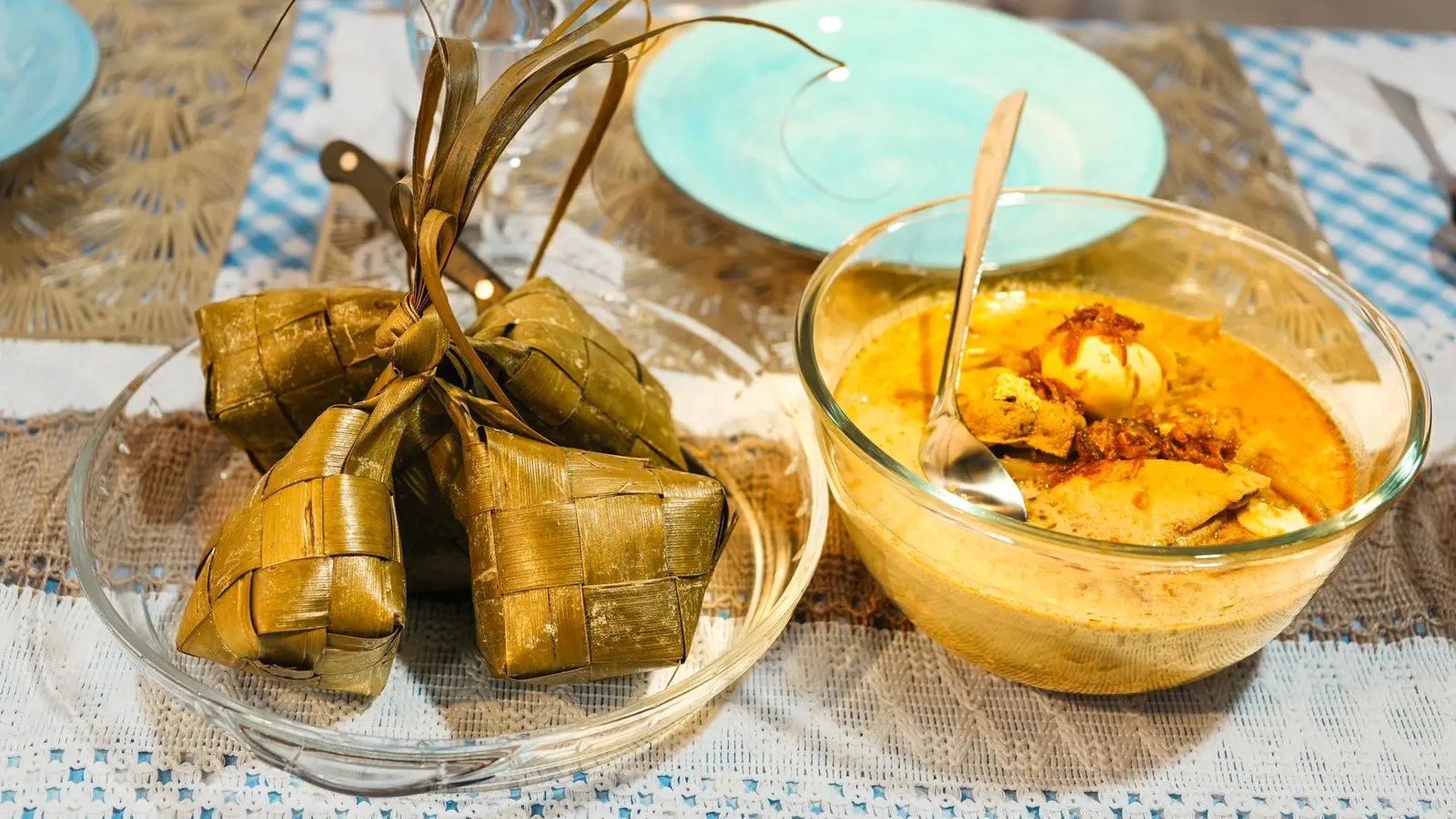
Rendang is a slow-cooked dish of meat simmered in coconut milk with a paste of chillies, shallots and fresh roots. The cooking continues until the sauce reduces to a thick, dark coating on the meat. Beef is the classic choice and can take hours to cook. Chicken becomes tender in under an hour, so this version is much easier to make on a weeknight.
In Singapore, rendang is a regular dish at nasi padang stalls, where you choose it from a counter of cooked dishes to eat with rice. Malay families in Singapore also serve it at festive meals, especially Hari Raya Puasa. Everything in this recipe can be bought at a neighbourhood wet market or a large supermarket such as FairPrice or Sheng Siong.
Ingredients
For the chicken
- 1 kg bone-in chicken thighs and drumsticks, skin removed, cut into large pieces (boneless thighs also work; see Tips)
- 1 tsp salt, for seasoning the chicken
For the spice paste
- 10 dried red chillies, soaked in hot water for 15 minutes and drained (use 6 for a milder dish)
- 3 fresh red chillies, roughly chopped
- 8 shallots, peeled
- 4 cloves garlic, peeled
- 3 cm galangal, sliced (or 2 cm extra ginger if you cannot find it)
- 3 cm ginger, sliced
- 3 cm fresh turmeric, sliced (or 1 tsp ground turmeric)
- 2 stalks lemongrass, the pale lower part only, sliced
- 3 tbsp water, to help it blend
For the curry
- 3 tbsp cooking oil
- 2 stalks lemongrass, bruised with the back of a knife
- 4 kaffir lime leaves, torn (or the grated zest of 1 lime)
- 1 cinnamon stick, about 5 cm
- 2 star anise
- 3 cloves
- 3 green cardamom pods, lightly crushed
- 400 ml coconut milk
- 100 ml water
- 1 tbsp tamarind paste mixed with 3 tbsp warm water, strained
- 1 tbsp grated gula melaka (or dark brown sugar)
- 1 tsp salt, plus more to taste
For the kerisik (toasted coconut)
- 80 g unsweetened desiccated coconut, or 4 tbsp ready-made kerisik from a wet market spice stall
Method
- Toss the chicken with 1 tsp salt and set it aside while you prepare the rest.
- Make the kerisik. Put the desiccated coconut in a dry wok over medium-low heat. Stir constantly for 8 to 10 minutes until it is evenly deep golden brown.
- While the coconut is still warm, pound it in a mortar or pulse it in a small blender for about 1 minute, until it clumps and looks oily. Set it aside.
- Put all the spice paste ingredients in a blender and blend for 1 to 2 minutes into a smooth paste.
- Heat the oil in a heavy pot or wok over medium heat. Add the cinnamon, star anise, cloves and cardamom and fry for 30 seconds until fragrant.
- Add the spice paste and turn the heat to medium-low. Fry for 10 to 12 minutes, stirring often, until the paste darkens and the oil starts to separate from it.
- Add the bruised lemongrass and the lime leaves. Stir for 1 minute.
- Add the chicken and turn the pieces so they are coated in the paste. Cook on medium heat for 3 minutes.
- Pour in the coconut milk and water. Bring to a boil, then lower the heat to a gentle simmer.
- Simmer uncovered for 25 minutes, stirring every 5 minutes so the bottom does not catch.
- Stir in the tamarind water, gula melaka, salt and kerisik.
- Keep simmering on low heat for 15 to 20 minutes more, stirring often. It is ready when the sauce is thick and dark and clings to the chicken, and oil shows around the edges.
- Taste and add more salt or sugar if needed. Take out the lemongrass stalks and whole spices if you prefer. Rest for 10 minutes off the heat, then serve with steamed rice.
Tips
- Rendang tastes better the next day. Make it a day ahead, cool it, and keep it covered in the fridge for up to 3 days. Reheat it gently in a pot over low heat.
- It freezes well for up to 1 month in an airtight container. Thaw it overnight in the fridge.
- Frying the paste too quickly is the most common mistake. Raw paste gives a sharp, harsh taste, so keep the heat at medium-low and wait for the oil to separate.
- The last 15 minutes need constant stirring. Once the sauce thickens, the coconut solids and kerisik can burn quickly.
- Boneless thighs cook faster. Cut the first simmer in step 10 to 15 minutes.
- Wet markets sell galangal, fresh turmeric, lemongrass and lime leaves cheaply, and some stalls sell ready-blended rempah (spice paste). Supermarkets usually stock packs of fresh herbs and frozen grated coconut.
Where to eat it in Singapore
These places are best known for beef rendang. Chicken dishes change from day to day, so check what is on the counter when you arrive.
- Rumah Makan Minang, 18 and 18A Kandahar Street, Kampong Gelam. A halal nasi padang restaurant serving Minangkabau food since 1954. It is listed on the National Heritage Board's SG Heritage Business Registry, which names rendang as one of its signature dishes. The family now runs it in its third generation.
- Hjh Maimunah, 11 Jalan Pisang, near Kampong Gelam. A halal Malay and Indonesian restaurant founded in 1992, with a Michelin Bib Gourmand. Beef rendang is one of its signature dishes. The Jalan Pisang branch opens 7.30am to 7pm, Monday to Saturday, and closes on Sundays. A second restaurant at 20 Joo Chiat Road opens 8am to 7pm, Tuesday to Sunday. There are also smaller food court outlets in malls such as VivoCity, Tampines Mall and Westgate.
The story
Rendang comes from the Minangkabau people of West Sumatra in Indonesia. According to the Michelin Guide, Minang traders had a custom of migrating to set up business across the Malay world. Many settled in Malacca, the region's main trading port in the 15th century. After the Portuguese took Malacca in 1511, many of its Malay and Minang people moved to other parts of the peninsula and to Singapore. Over time, Minang and Malay cooking merged, and slow-cooked rendang became a standard dish at nasi padang stalls. It is now a fixture at Malay festive meals in Singapore and Malaysia, especially Hari Raya Puasa at the end of Ramadan. Rumah Makan Minang in Kampong Gelam is one of the businesses that still carries this tradition, and the National Heritage Board recognises it as a heritage business.