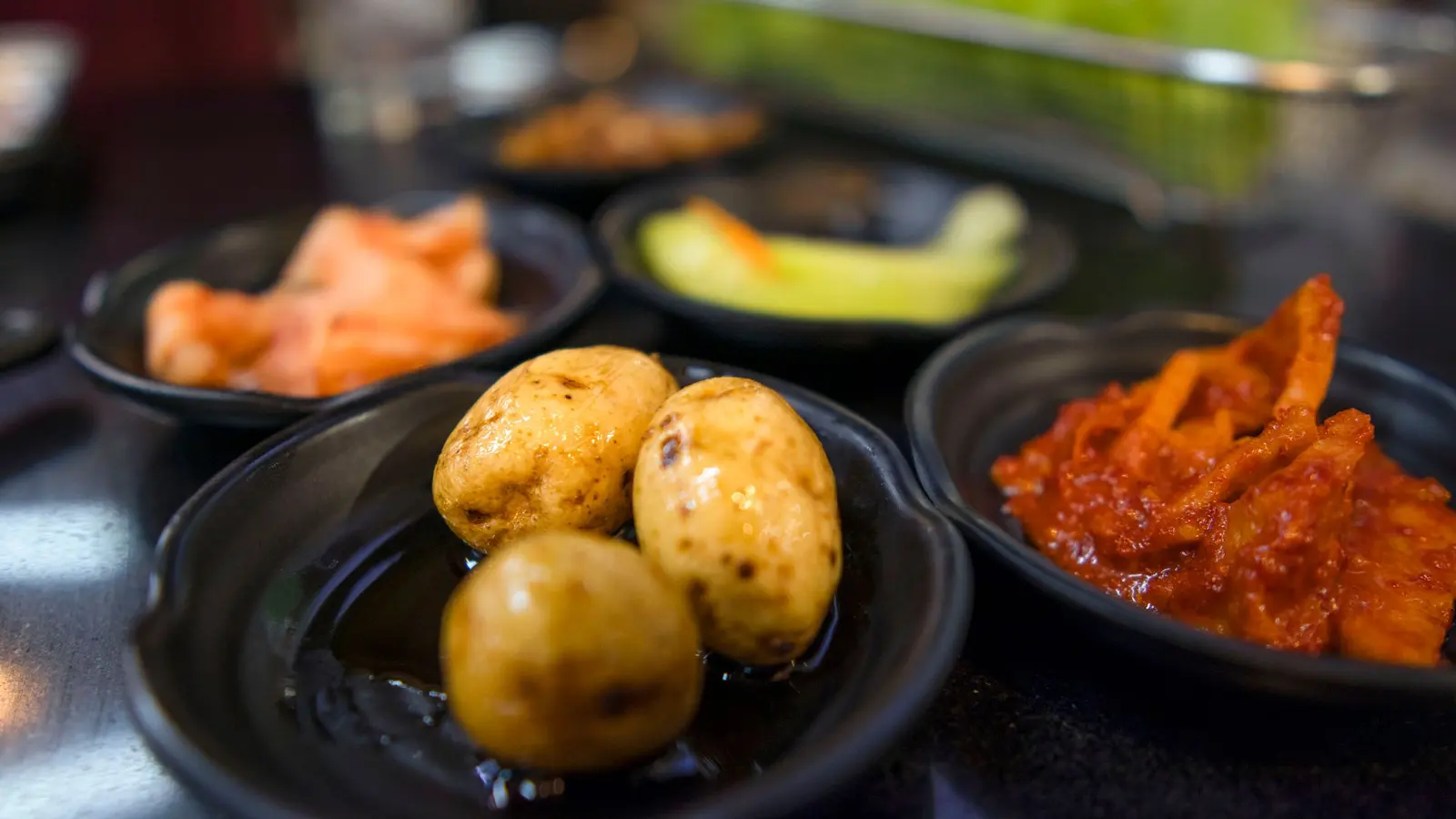
Babi pongteh is pork braised slowly with potatoes in a dark gravy made from fermented soybean paste (taucheo), lots of shallots and garlic, and a little palm sugar. The finished dish tastes salty, savoury and a bit sweet, and the potatoes soak up the gravy. It is cooked at home with rice and is also on the menus of Peranakan restaurants.
In Singapore it counts as one of the core Peranakan home dishes. Every ingredient is easy to buy here. Taucheo, gula melaka and dried shiitake are on the shelves at most supermarkets, and a wet market pork stall will cut belly or shoulder to the size you ask for.
Ingredients
For the braise
- 700 g pork belly with skin, or half belly and half shoulder for a leaner pot, cut into 3 to 4 cm chunks
- 500 g potatoes (about 3 medium), peeled and cut into large chunks
- 6 dried shiitake mushrooms
- 150 g shallots (about 12 small Asian shallots), peeled
- 8 cloves garlic, peeled
- 3 tbsp taucheo (fermented soybean paste, the kind with whole beans)
- 1 tbsp light soy sauce
- 1 tbsp dark soy sauce
- 30 g gula melaka (palm sugar), chopped, or 2 tbsp dark brown sugar
- 3 tbsp cooking oil
- 600 ml water, including the mushroom soaking liquid
- Salt or a little more sugar, to adjust at the end
To serve
- 2 green chillies, sliced (optional)
- Steamed white rice
Substitutes
- If you cannot find taucheo, Chinese brown bean sauce or Korean doenjang works. Both are saltier and less beany, so start with 2 tbsp and taste.
- If you have no shallots, use 1 large red onion. The gravy will be less sweet and less thick.
- Chicken thighs on the bone can replace the pork. Cut the simmering time to about 35 minutes.
Method
- Soak the dried shiitake in 250 ml hot water for 30 minutes. Squeeze them dry, keep the soaking liquid, and cut off and discard the stems.
- Pound or blend the shallots and garlic into a coarse paste. If the blender needs help, add 1 to 2 tbsp water.
- Lightly mash the taucheo with a spoon so that about half the beans break up.
- Heat the oil in a heavy pot over medium heat. Fry the shallot and garlic paste for 6 to 8 minutes, stirring often, until it turns golden and smells sweet. Do not let it brown at the edges.
- Add the mashed taucheo and fry for 2 minutes more, stirring all the time.
- Add the pork and turn the heat to medium-high. Stir for 4 to 5 minutes until the outside of the meat is no longer pink and is coated in the paste.
- Stir in the gula melaka, light soy and dark soy, and cook for 1 minute until the sugar melts.
- Pour in the mushroom soaking liquid and enough water to make 600 ml in total, then add the shiitake. Bring to a boil.
- Turn the heat to low, cover, and simmer for 45 minutes. Stir every 15 minutes so nothing sticks.
- Add the potatoes, pushing them down into the gravy. Cover and simmer for another 25 to 30 minutes, until a knife goes easily into the potatoes and the pork.
- Uncover, turn the heat to medium, and cook for 5 to 10 minutes until the gravy thickens enough to coat a spoon.
- Taste. Add salt if it is flat or a pinch of sugar if it is too salty. Turn off the heat, top with sliced green chilli if you like, and serve with rice.
Tips
- Make it a day ahead. The flavour gets deeper overnight. In the fridge the fat sets on top and is easy to lift off before reheating.
- It keeps for 3 days in a covered container in the fridge. Reheat gently on the stove, adding a splash of water if the gravy is too thick. Potatoes go grainy when frozen, so freeze only the pork and gravy.
- Brands of taucheo vary a lot in saltiness. Leave the seasoning until the end, because the gravy concentrates as it reduces.
- If you add the potatoes at the start, they break down before the pork is tender.
- Fry the shallot paste slowly. That step gives the gravy most of its body and sweetness.
Where to eat it in Singapore
- Rempapa, 1 St Andrew's Road, #01-02/03, National Gallery Singapore. This is chef Damian D'Silva's heritage restaurant, and its own website names babi pongteh among its dishes.
- Guan Hoe Soon, 200 Joo Chiat Road, #01-01. The restaurant says it has served Peranakan food since 1953. Check the current menu for babi pongteh before you go.
- Candlenut, 17A Dempsey Road. A Michelin-starred Peranakan restaurant with lunch and dinner daily. The menu changes, so check whether babi pongteh is on it.
- Violet Oon Singapore, 7 Dempsey Road, #01-05. A Peranakan and Singaporean restaurant. Check its main menu for babi pongteh.
The story
National Heritage Board's Roots lists Peranakan cuisine in Singapore's intangible cultural heritage inventory. Roots describes the cooking as a mix of Chinese, mainly Hokkien, ingredients and methods with the spices and local ingredients of the Malay community. Roots also names babi pongteh as one of the best-known Peranakan dishes and describes it as a pork stew seasoned with taucheo, or yellow bean paste. Pork and fermented beans come from the Chinese kitchen, while the shallot rempah and palm sugar are typical of the region.