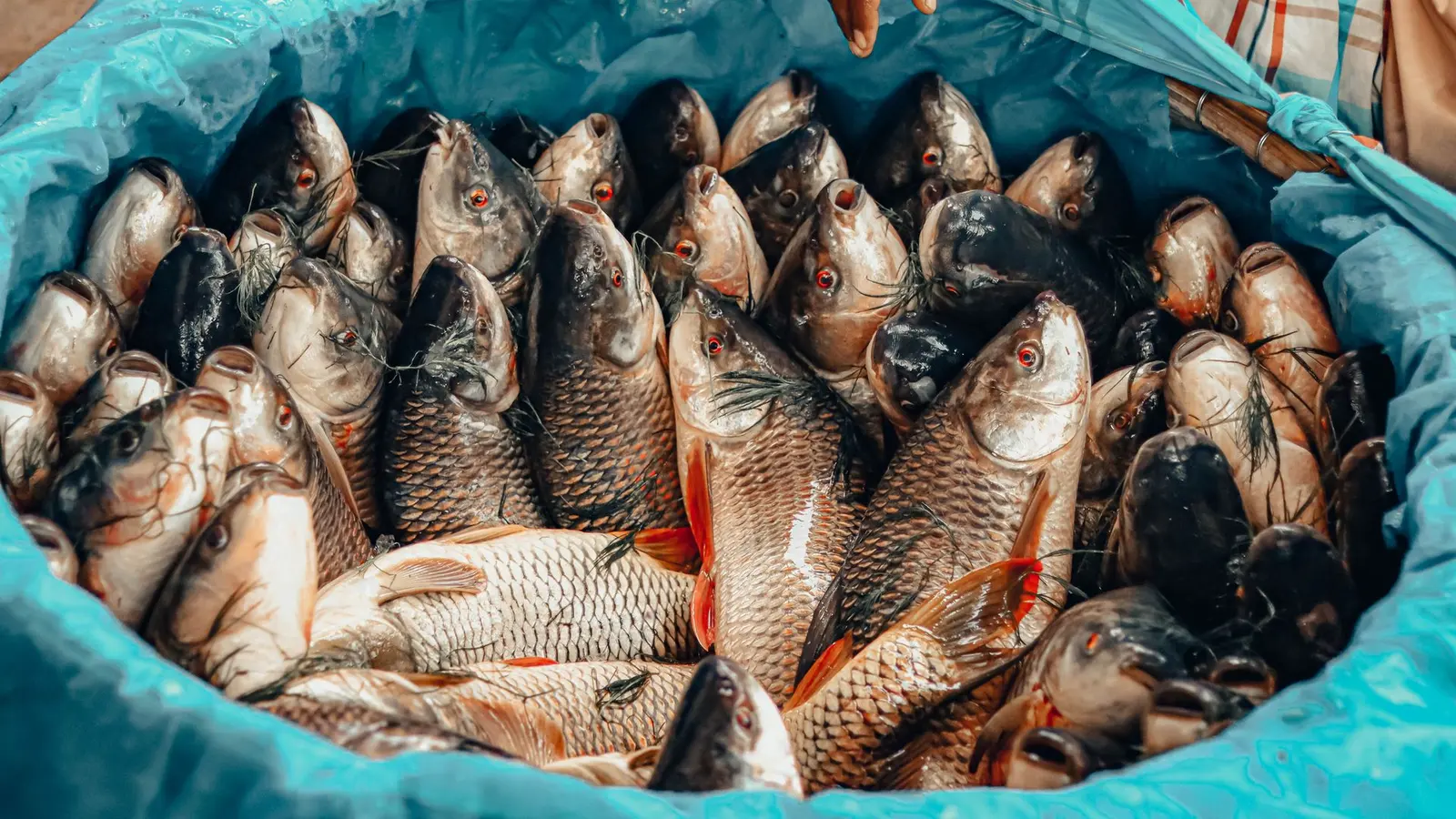
Assam pedas means "sour and spicy" in Malay, and the name sums up the dish. Fish steaks simmer in a thin red gravy made from tamarind water and a pounded paste of chillies, shallots, lemongrass and belacan. Okra and brinjal cook in the same pot and soak up the sharp, fiery sauce. You eat it with plenty of plain white rice.
In Singapore you find it at Malay home tables and nasi padang stalls, and Peranakan restaurants serve their own versions. Both kitchens use the same building blocks: a fresh spice paste (rempah), belacan and tamarind. Everything below is easy to buy here, at a wet market fishmonger or a FairPrice, Sheng Siong or Cold Storage.
Ingredients
For the fish and vegetables
- 600 g firm fish steaks, about 2 cm thick: Spanish mackerel (ikan tenggiri), red snapper (ikan merah) or stingray (ikan pari). Half a red snapper head also works.
- 1 tsp salt and 1/2 tsp ground turmeric, for rubbing the fish
- 8 okra (lady's fingers), tops trimmed
- 1 small long brinjal (eggplant), cut into 5 cm pieces
- 2 medium tomatoes, quartered
- 1 small bunch laksa leaf (daun kesom), about 10 sprigs
- 1 torch ginger flower (bunga kantan), halved lengthwise (optional)
For the spice paste (rempah)
- 12 dried red chillies, soaked in hot water for 15 minutes and drained (use fewer for a milder pot)
- 3 fresh red chillies, roughly chopped
- 10 shallots (about 120 g), peeled
- 4 cloves garlic, peeled
- 2 stalks lemongrass, white part only, sliced
- 3 cm galangal, peeled and sliced
- 2 cm fresh turmeric, peeled (or 1 tsp ground turmeric)
- 10 g belacan (shrimp paste), toasted in a dry pan until fragrant
- 3 candlenuts (buah keras), optional, for a slightly thicker gravy
For the gravy
- 40 g tamarind pulp (assam), seeds in
- 750 ml water
- 4 tbsp cooking oil
- 1 stalk lemongrass, bruised
- 1 tbsp sugar, or to taste
- 1 tsp salt, or to taste
Substitutes: if you can't find fresh galangal or turmeric, the supermarket spice aisle has ground versions (use 1 tsp of each). Laksa leaf is sold at wet market vegetable stalls, and Vietnamese mint is the closest swap. Without torch ginger flower the dish still works, with a little less floral scent. If you have no time to make rempah, ready-made asam pedas paste comes in packets at most supermarkets. Taste it before salting, because many packets are already salted.
Method
- Rub the fish with 1 tsp salt and 1/2 tsp ground turmeric. Leave it in the fridge while you prepare the rest.
- Put the tamarind pulp in a bowl with the 750 ml water. Leave it for 10 minutes, squeeze the pulp with your fingers, then strain and throw away the seeds and fibre.
- Blend all the spice paste ingredients into a fine paste, adding 2 to 3 tbsp water if the blender sticks.
- Heat the oil in a wide pot or wok over medium heat. Add the paste and the bruised lemongrass.
- Fry the paste for 10 to 12 minutes over medium-low heat, stirring often, until it darkens, smells sweet and the oil separates out.
- Pour in the tamarind water and bring it to a boil over high heat.
- Add the brinjal and the torch ginger flower. Lower the heat to medium and simmer for 5 minutes.
- Add the okra, tomatoes and laksa leaf. Simmer for 3 minutes.
- Slide in the fish in one layer. Simmer gently over medium-low heat for 6 to 8 minutes, until the fish is opaque all the way through. Spoon gravy over the fish rather than stirring, so it doesn't break up.
- Season with the sugar and salt. Taste it: you want it clearly sour first, then hot, with a little sweetness in the background. Add more tamarind water, sugar or salt to adjust.
- Take the pot off the heat and serve hot with steamed white rice.
Tips
- Frying the paste long enough matters most. Raw rempah tastes harsh and bitter, so keep going until the oil splits away from the paste.
- Make ahead: fry a double batch of rempah and keep half in the fridge for up to 5 days, or freeze it in portions for up to 1 month.
- The curry tastes even better the next day. Keep leftovers covered in the fridge for up to 2 days and reheat gently so the fish holds together.
- Ask the fishmonger to cut steaks or halve a fish head for you. Thin fillets fall apart in the gravy.
- Tamarind blocks vary in sourness, so add the strained water in stages if you are unsure.
- Toast belacan in a well-ventilated kitchen. It smells strong while it cooks.
Where to eat it in Singapore
- Chilli Padi Nonya Restaurant, 11 Joo Chiat Place #01-03. This Peranakan restaurant in Joo Chiat lists Ikan Assam Pedas (golden snapper fillet) and an Assam Pedas Fish Head on its July 2026 menu. A 2026 review notes the fish head sometimes sells out.
- Candlenut, 17A Dempsey Road. This Michelin-starred Peranakan restaurant lists Ikan Assam Pedas made with barramundi fillet, okra, brinjal, pineapple, laksa leaf and torch ginger flower on its October 2026 à la carte menu. It serves lunch and dinner daily.
- The Blue Ginger, 97 Tanjong Pagar Road. This Peranakan restaurant serves Ikan Masak Assam Gulai, red snapper in a spicy tamarind gravy with lemongrass and ginger flower. It is open daily for lunch and dinner.
Menus and hours change, so check with the restaurant before you go.
The story
The National Heritage Board's inventory of Malay cuisine in Singapore groups Malay side dishes into a few cooking styles. One of them is masak asam, dishes built on tamarind (asam jawa). The same entry notes that the Malays were traditionally a seafaring people, so fish and other seafood have always been central to their cooking, and that Singapore's Malay food draws on Sumatran and Javanese as well as Malaysian traditions. A 2023 National Library podcast on belacan calls asam pedas a popular Malay dish and names it among the everyday foods that quietly rely on shrimp paste. Peranakan kitchens, which mix Chinese and Malay cooking, cook their own tamarind fish too, as the restaurant menus above show.