
On this page
Key facts
- English arrives
- 1819; Malay stayed the common language until the early 1900sSource: SG101
- English in schools
- Compulsory in primary schools from 1960, secondary from 1966Source: SG101
- Speak Good English Movement
- Launched April 2000Source: SG101
- Singlish in the OED
- 19 Singapore English entries added in 2016, 27 in totalSource: SG101
- Hawker culture on UNESCO list
- Inscribed in 2020, Singapore's first entrySource: UNESCO / NHB
- Table clearing enforced
- From 2021-09-01 at all hawker centres; written warning, then finesSource: National Environment Agency
- Heritage inventory
- 106 elements in six categories as of March 2024Source: National Heritage Board (Roots.sg)
- 1964 riots
- Began 1964-07-21; 23 dead, 454 injured in the first waveSource: SG101
Singapore runs on written rules and on rules nobody writes down. This guide covers the second kind: the way people talk, queue, eat and celebrate together. It is for anyone here, whether you were born in Singapore, have just moved or are visiting for a week.
For the practical rules visitors can be fined for, see Rules visitors should know in Singapore. For tipping, dress and other travel etiquette, see Singapore travel tips.
Singlish: where it came from
English reached Singapore in 1819, but Malay remained the common language between communities until the early 1900s. When English-medium schools and colleges opened in the early 20th century, English became the language that got you ahead. Alongside it grew an informal, spoken version shaped by the Malay, Chinese dialects, Tamil and other languages people used at home. That everyday version is Singlish.
After 1959, the government made English the working language between races, partly because it belonged to no single community. English became compulsory in primary schools from 1960 and in secondary schools from 1966.
Singlish has not always been welcome officially. The Speak Good English Movement began in April 2000, after concerns that English standards were slipping, and pushed for standard English that the rest of the world understands. In September 2010 an anonymous Speak Good Singlish Movement appeared in reply. It celebrated Singlish while drawing a line between real Singlish and simply bad English.
The outside world has taken notice. In 2016 the Oxford English Dictionary added 19 Singapore English entries, bringing its count of Singlish words to 27. Feelings at home are mixed. A 2018 Institute of Policy Studies study found that 8% of Singaporeans identified most closely with Singlish, against about a third who chose English. Singlish is still not on Singapore's official list of intangible cultural heritage.
Most Singaporeans switch between registers. They speak standard English at work or with visitors and slide into Singlish with friends, at the hawker centre or in a taxi. If you are new, nobody expects you to speak it. Understanding it helps a lot.
Words you will hear first
Our Singlish dictionary has the full list with examples. These come up in daily life almost straight away:
- Lah: a sentence ending that adds warmth, emphasis or impatience. The tone does most of the work.
- Kiasu: from Hokkien, roughly "afraid to lose". It means not wanting to miss out, so you queue early, book months ahead and take a bit extra. People say it with a smile about themselves and with a sigh about others.
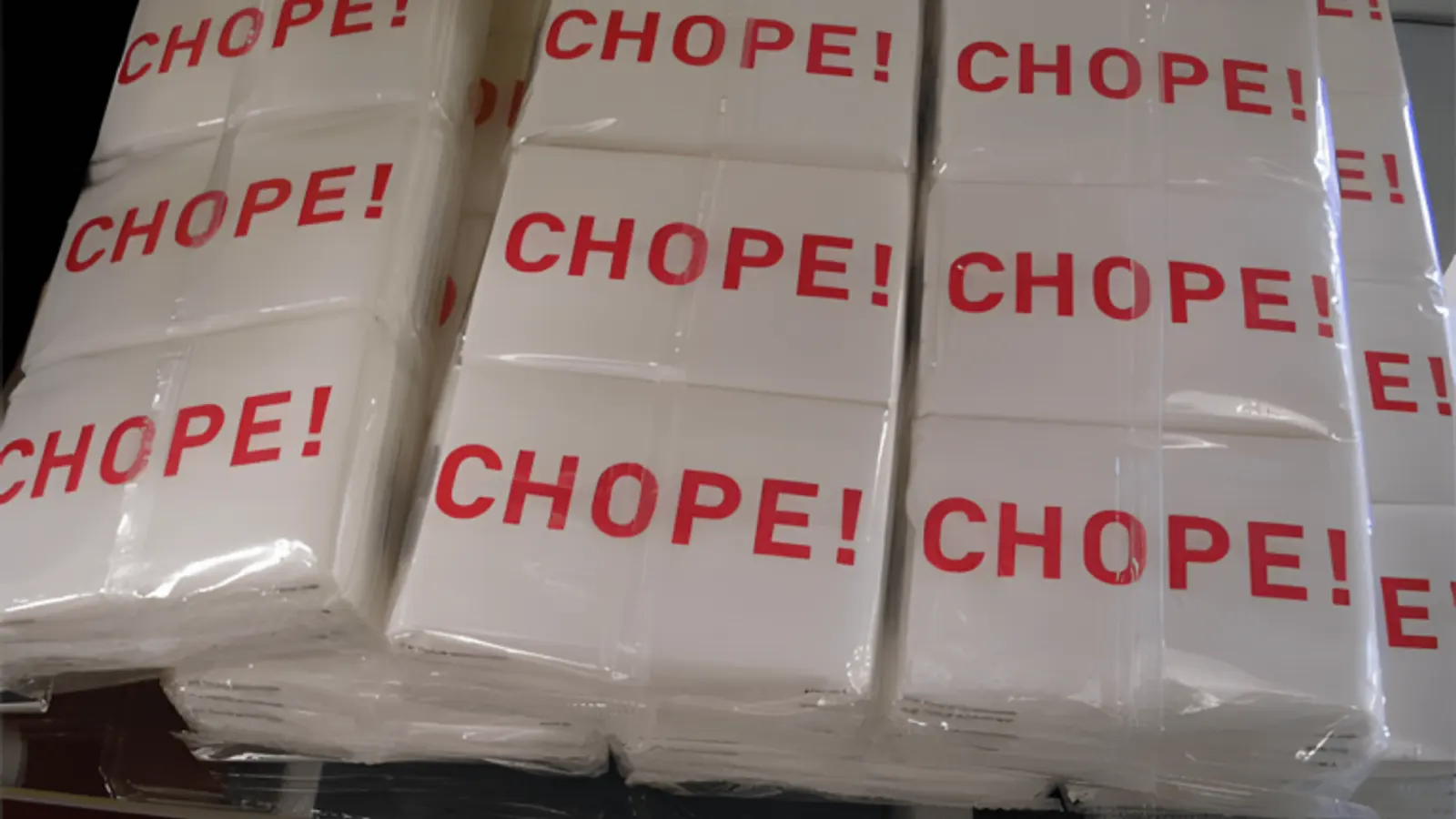
- Chope: to reserve a seat, usually by leaving a tissue packet, umbrella or lanyard on the table. See the next section.
- Makan: to eat, or food in general. Borrowed from Malay.
- Tapao / dabao: takeaway. "Two chicken rice, tapao."
- Shiok: deeply satisfying, usually food.
- Paiseh: embarrassed, or sorry for the trouble.
- Uncle / auntie: the polite way to address an older stranger, such as a hawker or taxi driver. It is respectful, not overly familiar.
Kopi shop orders are a language of their own. How to order kopi and kaya toast decodes them.
Kiasu and chope in real life
Kiasu explains a lot of everyday Singapore: queues that form before a shop opens, lucky-draw forms filled in on day one, campsites and BBQ pits booked the minute slots open. Not everyone is kiasu, and many people joke about it, but you will see it.
Chope is kiasu at lunchtime. At a busy hawker centre, one person in a group leaves a tissue packet on an empty table while the others queue for food. The unwritten rule is to respect it. A table with a packet, umbrella or card on it is taken, even if nobody is sitting there. If you are alone and the place is packed, it is normal to ask to share a table that has free seats.
Hawker centres: heritage with house rules
In 2020 UNESCO added Singapore's hawker culture to its Representative List of the Intangible Cultural Heritage of Humanity, Singapore's first entry on that list. UNESCO describes hawker centres as community dining rooms where people of every background eat side by side. They grew out of street food, and some of the hawkers working today started in the 1960s. Recipes and skills pass to family members or apprentices. Hawker centres are also places for chess games, buskers and art sessions, not only meals.
The one rule you must follow is to clear your table. Under the National Environment Agency's Clean Tables campaign, enforcement began at all hawker centres on 2021-09-01. Diners must:
- Return trays, plates and cutlery to the tray return point.
- Clear used tissues, wet wipes, straws, wrappers, cans, bottles and food scraps such as bones and shells.
- Pick up anything that falls or blows onto the floor.
NEA officers first ask people to clear up. Diners who ignore the advice get a written warning the first time, and composition or court fines after that. A spilled drink or gravy is not an offence. Officers do not act against frail elderly diners, people with disabilities or young children who cannot clear up, and family members are expected to help them. If the tray rack is full, leaving your tray beside it is accepted. At zi char and steamboat stalls with their own service staff, NEA takes a practical view, but you should still return trays and clear litter.
New to hawker food? Start with the hawker centre guide for newcomers. Then try the best hawker centres by neighbourhood and heritage hawker stalls worth visiting before they go.
Living heritage: what Singapore officially records
The National Heritage Board keeps an inventory of Singapore's intangible cultural heritage on Roots.sg. It records living traditions, ones still practised here today, in six groups:
- Social practices, rituals and festive events
- Knowledge and practices about nature and the universe
- Oral traditions and expressions
- Traditional craftsmanship
- Food heritage
- Performing arts
As of March 2024 it covered 106 elements, and more are added over time. The list shows how ordinary much of Singapore's heritage is. It includes the kaya toast and kopi breakfast, kueh, sambal, cheongsam tailoring, the baju kurung and songkok, kebaya craft, sepak takraw, Chinese opera, wayang kulit, Indian dance, traditional Malay music, Eurasian and Indian cuisine, and birthing traditions. Browsing it is a good way to understand what Singaporeans mean when they talk about "our culture".
Festivals: one calendar, many communities
A big part of local identity is that people celebrate one another's festivals. Office pantries fill with pineapple tarts at Chinese New Year and kuih at Hari Raya, and Deepavali lights draw crowds from every community into Little India. Each major festival has its own guide on this site with dates, customs and etiquette:
- Singapore festivals calendar: month by month
- Chinese New Year and the Chingay Parade
- Pongal and Thaipusam
- Hari Raya Puasa and Hari Raya Haji
- Vesak Day
- Hungry Ghost Festival and Mid-Autumn Festival
- National Day
- Deepavali
- Christmas
For which of these are days off, see public holidays in Singapore.
Why racial harmony is taken seriously
Newcomers sometimes wonder why race and religion are handled so carefully here. Part of the answer is history. On 21 July 1964, clashes broke out during a procession marking the Prophet Muhammad's birthday and spread across the island. They took 17 days to bring under control and left 23 people dead and 454 injured. A second wave followed weeks later, and there was more violence in 1969. Afterwards, community leaders of every race formed Goodwill Committees in each constituency to calm neighbourhoods and stop rumours.
That memory explains a habit you will notice quickly. Most people avoid jokes and loose talk about race or religion in public, and festivals of one community are treated as everyone's.
A few unwritten rules to finish
- Respect a choped seat, and clear your own table.
- Call older strangers uncle or auntie.
- Join the queue. A long queue at a hawker stall is usually a good sign, not a reason to walk away.
- Expect to hear Singlish and standard English from the same person in the same hour. Both are normal.
- When in doubt about a word, look it up in the Singlish dictionary.
Last updated 27 Nov 2026 · Checked against official sources on 27 Nov 2026