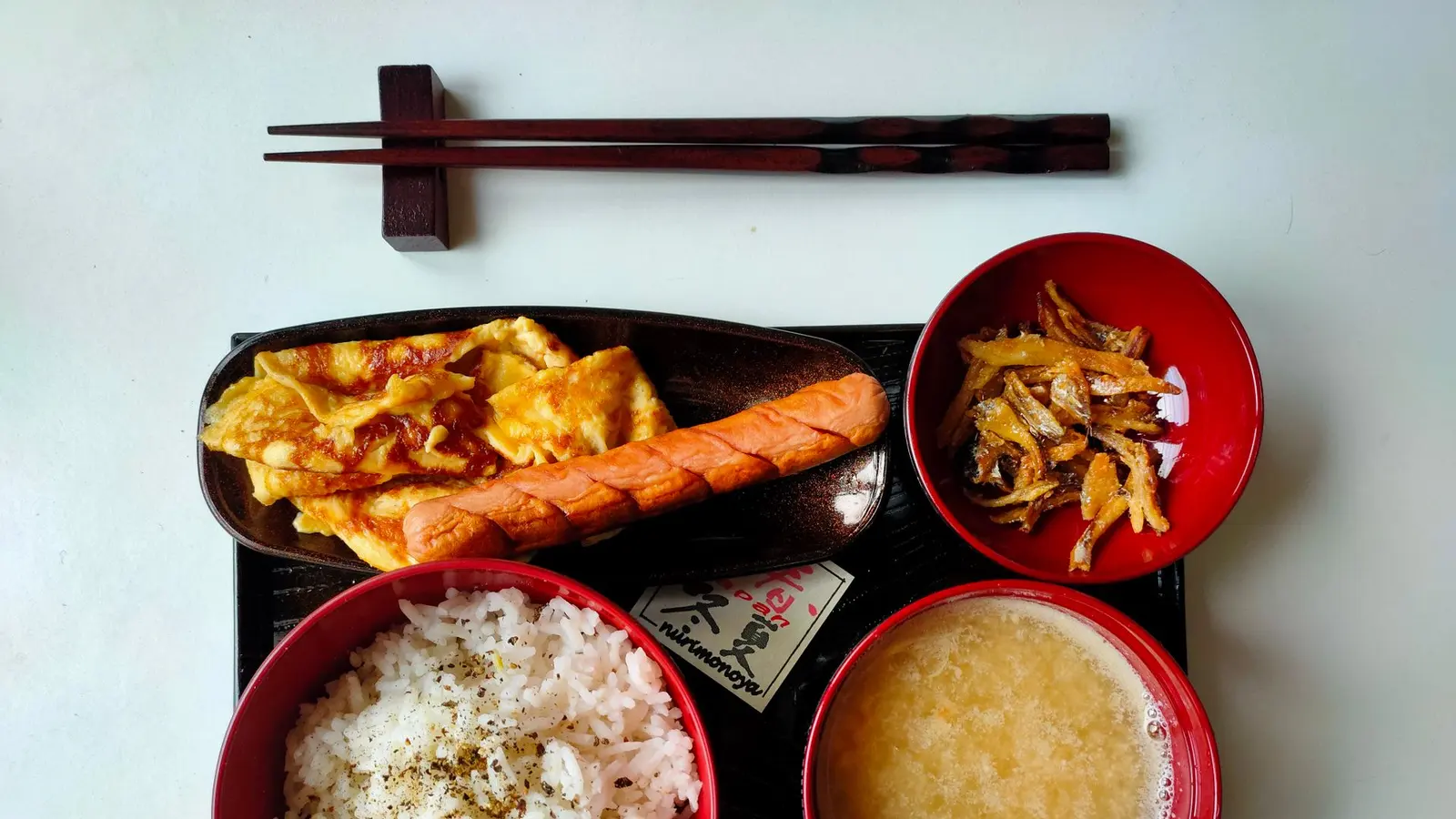
Chai poh omelette (also spelled chye poh or cai poh) is a fluffy omelette with crunchy bits of preserved radish all through it. The edges are fried until lacy and brown, and the radish gives every mouthful a hit of salt with a little sweetness. You will find it at Teochew porridge stalls and on the menus of Chinese restaurants across Singapore. It is cheap and quick, and at home it makes a good side for plain rice or porridge.
It is Singaporean because of the radish. Chai poh came here with Teochew immigrants, who ate it with their rice porridge, and it is still used in local dishes such as fried carrot cake. This version is easy enough for a weeknight and uses ingredients from any Singapore supermarket or wet market dried-goods stall.
Ingredients
For the radish
- 50 g chopped preserved radish (chai poh), sweet or salty, or a mix of both
- 2 cloves garlic, finely chopped
- 1 tbsp vegetable oil
- 1/2 tsp sugar (only if you use salty chai poh alone)
For the omelette
- 4 large eggs
- 1 spring onion, thinly sliced
- 1/4 tsp ground white pepper
- 1/2 tsp fish sauce or light soy sauce (optional; leave it out if your radish is very salty)
- 3 tbsp vegetable oil
Substitutes
- Chai poh is sold in small packets, either whole strips or already chopped. Chopped is easier. If you buy strips, chop them into rice-grain-sized pieces.
- If you cannot find chai poh, use the same weight of salted mustard greens (kiam chye), well rinsed and finely chopped. The taste is sourer but works the same way.
- Chives or chopped coriander can replace the spring onion.
Method
- Put the chopped chai poh in a bowl of water for 5 minutes to wash off extra salt and grit. Drain it and squeeze it very dry in your hands.
- Taste a piece. If it is still very salty, soak it for another 5 minutes and squeeze it dry again.
- Heat 1 tbsp oil in a wok or 24 cm non-stick pan over medium-low heat.
- Add the chai poh and fry for 3 minutes, stirring often, until it smells toasty and the edges start to turn golden.
- Add the garlic, and the sugar if using, and fry for 1 more minute until the garlic is pale gold. Do not let it burn.
- Tip the radish into a bowl and leave it to cool for 5 minutes, so it does not cook the eggs when you mix them.
- Crack the eggs into a large bowl. Add the white pepper, spring onion and fish sauce or soy sauce, if using. Beat with chopsticks for about 30 seconds until no streaks of white remain.
- Stir the cooled radish and garlic into the eggs.
- Wipe the pan, add 3 tbsp oil and heat over high heat for about 1 minute, until the oil shimmers.
- Pour in all the egg at once. It should puff and sizzle at the edges right away.
- Leave it alone for 1 minute, then use a spatula to push the cooked edges towards the centre so raw egg runs underneath. Do this two or three times.
- Turn the heat down to medium and cook for another 1 to 2 minutes, until the underside is deep golden and the top is nearly set.
- Cut the omelette in half with the spatula and flip each half. Cook for 1 minute more until golden on the second side.
- Slide it onto a plate, cut it into wedges and serve hot with plain rice or porridge.
Tips
- Make ahead: You can fry a big batch of chai poh with garlic, cool it and keep it in a clean jar in the fridge for up to a week. It then takes about 5 minutes to make an omelette.
- Storage: The cooked omelette keeps for a day in the fridge, but the crisp edges go soft. Warm it in a dry pan over medium heat rather than in the microwave.
- Too salty: This is the most common mistake. Always soak and taste the radish, and add soy or fish sauce only after you have tasted it.
- Pale and flat: If the oil is not hot enough, the egg soaks it up and does not puff. Wait until it shimmers before you pour.
- Sweet or salty chai poh: Sweet chai poh gives a rounder taste and browns faster, so watch it in step 4. Many cooks mix the two.
Where to eat it in Singapore
- Chui Huay Lim Teochew Cuisine: A sit-down Teochew restaurant at 190 Keng Lee Road, #01-02, near Newton MRT. Its chye poh omelette was photographed for the Singapore Chinese Cultural Centre's Culturepaedia guide to Teochew food. Listed hours are 11.30am to 2.30pm and 5.30pm to 11pm daily.
- Soon Soon Teochew Porridge Restaurant: A porridge restaurant at 13 Simon Road, near Kovan MRT. Food guide Eatbook singles out its preserved radish omelette and warns that it sells out quickly, so go early.
- Ye Lai Xiang Teochew Porridge: A late-night porridge stall at 116 Bukit Merah View, #01-217. It lists the preserved radish omelette among its recommended dishes and stays open until 4am, so it is popular for supper.
Opening hours and menus at porridge stalls change often. Check before you make a special trip.
The story
Teochew people came to Singapore from the Chaoshan region of southern China, and many left after the port of Shantou opened to trade in 1860, according to the Singapore Chinese Cultural Centre. Many settled near the Singapore River and on the northern coast. A cheap everyday meal for these workers was muay, a thin rice porridge, eaten with chai poh and other preserved foods. The National Heritage Board lists preserved radish as one of the three key ingredients of Teochew cooking, along with fish sauce and pickled mustard greens. Today, porridge stalls set out a long row of side dishes, and the chai poh omelette is one of them.